Disclosure: Synder makes one of the tools below; every tool is judged on the same criteria.
Choosing the best accounting software for restaurants starts with three questions you probably already ask. Why doesn’t a Toast or Square deposit match the day’s sales? Which of your locations made money last week? And can you get daily POS sales into your accounting software without retyping a Z-report?
Card processing fees help explain the difference between sales and deposits. According to the National Restaurant Association, processing credit card transactions is the third-largest operating expense for most restaurants, after food and labor. Those fees are deducted before card deposits reach the bank.
Restaurant accounting software needs to record those fees alongside daily sales, tips and taxes, so the books can explain the deposits and show how each location is performing. We compared seven tools to see how they handle that work.
TL;DR
- Pick the type of software (ledger, all-in-one platform or add-on) before the brand.
- If your accountant already works in a ledger, you may only need an add-on.
- Ask how the software gets POS sales, fees and deposits into your ledger.
- Choose software that posts fees, refunds and tips on separate lines.
- Check that the software tags every entry with its location.
- Test the software on one real day before you commit.
For a quick recommendation, here’s which tool fits each setup.
The best restaurant accounting software at a glance
The right restaurant accounting software depends on whether you need a ledger, a way to post daily POS sales, or help managing supplier bills. These are our picks for each situation:
- Your accountant already works in QuickBooks: QuickBooks Online.
- Your bookkeeper works in Xero: Xero.
- You have several legal entities to consolidate: Sage Intacct.
- You want one platform that replaces your ledger and handles the whole back office: Restaurant365.
- You want to keep QuickBooks or Xero and stop typing in daily POS sales: Synder.
- Your kitchen deals with lots of invoices and tracks food cost daily: MarginEdge.
- You pay many vendors and bills across locations: Ottimate.
Compare the tools by type before you compare their prices. A general ledger, an add-on and an all-in-one restaurant platform handle different parts of the work.
| Tool | Type | Best for | Covers | Works with | Starting price | G2 rating (reviews) |
| QuickBooks Online | General ledger | Owners whose accountant uses QuickBooks | Bills, payroll (add-on); POS sales via a connector | POS apps and connectors | $38/mo (Simple Start) | 4.0/5 (3,908 reviews) |
| Xero | General ledger | Groups with a Xero bookkeeper | Bills, payroll in some regions; POS sales via a connector | POS apps and connectors | $27/mo (Early) | 4.4/5 (1,854 reviews) |
| Synder | POS-to-accounting connector | Groups keeping QuickBooks or Xero | POS sales, fees, tips, sales tax, deposits | Toast, Square, Clover / QuickBooks Online, Xero | $52/mo billed yearly | 4.7/5 (251 reviews) |
| Sage Intacct | Multi-entity ledger | Groups with several legal entities | Bills, multi-entity consolidation, POS sales import | Daily POS sales import | Quote-based | 4.3/5 (4,536 reviews) |
| Restaurant365 | All-in-one restaurant platform | Groups replacing their ledger | POS sales, bills, inventory and food cost, payroll | Square and other POS systems; own ledger | Pricing on request | 4.6/5 (325 reviews) |
| MarginEdge | AP & invoice automation | Invoice-heavy kitchens | Invoices, bill pay, inventory and food cost | Toast and other POS / accounting integrations | $350 per location/mo | 4.6/5 (31 reviews) |
| Ottimate (formerly Plate IQ) | AP & invoice automation | Many vendors across locations | Invoices, vendor payments, approvals | Accounting integrations | Contact sales | 4.6/5 (210 reviews) |
Prices, G2 ratings and review counts: November 10, 2026. G2 ratings reflect reviews across industries, not exclusively restaurant customers.
How to choose restaurant accounting software
For a restaurant group with four Square locations that already uses QuickBooks Online, switching to a new accounting system may be unnecessary. A more practical option is to automate how daily sales, tips and fees reach QuickBooks, which is why choosing the right type of software matters as much as choosing the product itself.
Ledger, all-in-one or add-on: 3 types of restaurant bookkeeping software
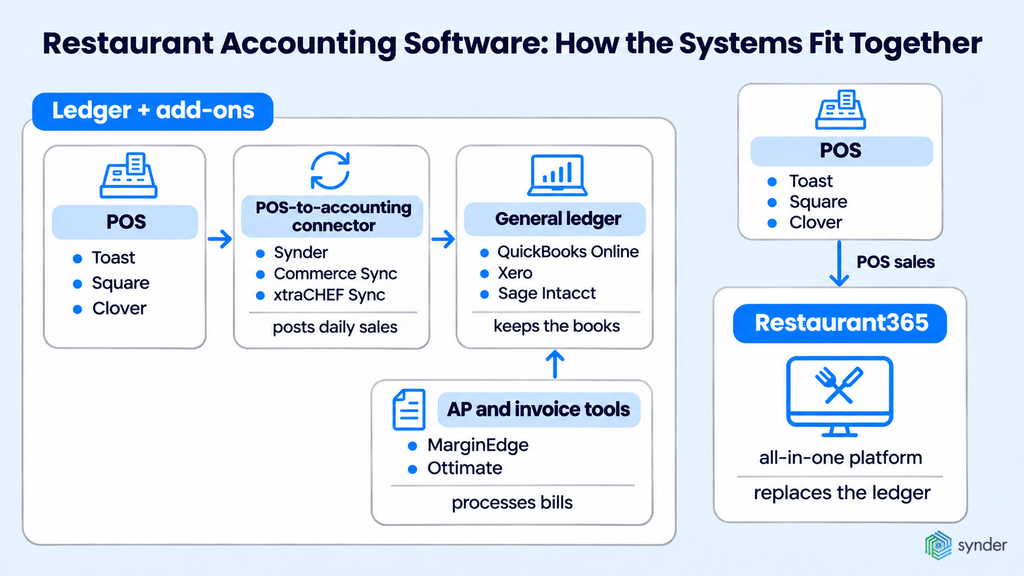
Restaurant accounting software falls into three types, and some can be used together. If you’re looking for the best restaurant bookkeeping software, the first decision is which of these types you need. Bookkeeping software records daily sales, deposits and bills; restaurant financial software adds reporting, payroll and tax. The three general ledgers in this comparison are online systems that let owners and accountants work in the same file.
| Type | What it does | Choose it if | Watch for |
| General ledger (QuickBooks Online, Xero, Sage Intacct) | Keeps the books: chart of accounts, bills, bank, reports | Your accountant or bookkeeper already uses it | No recipe costing; POS sales need a connector or manual entries |
| All-in-one restaurant platform (Restaurant365) | Replaces your ledger with a restaurant-specific ERP that adds inventory, recipes and labor | You want one system for the whole back office | Moving your books off your current ledger |
| Add-ons: POS-to-accounting connector (Synder) and AP & invoice automation (MarginEdge, Ottimate) | Post data into the ledger you keep | You keep your ledger and want one manual step automated | An add-on still needs a ledger behind it |
A POS-to-accounting connector takes sales, tips, taxes, fees and deposits from the point-of-sale system and posts journal entries to the existing ledger.
For restaurants keeping their current ledger, the POS connection deserves particular attention. An incorrect setup can mix fees, tips and refunds into daily sales entries and leave deposits difficult to reconcile.
Restaurant accounting system checklist: what to check before you buy
A demo or free trial is a chance to test a real day of restaurant activity, rather than relying on a feature list. These six checks also form the criteria used in our method section.
- Does it connect to your POS? Check whether Toast, Square for Restaurants or Clover POS connects natively or needs an add-on.
- Does one day tie out? Pick a day and check that the deposit matches the POS report without manual edits.
- Where do tips go? Tips should post to tips payable, the money you owe staff, not to revenue.
- Is sales tax tracked by location? Each location’s tax should post to the right liability account.
- Can every entry carry a location? Look for QuickBooks classes or locations, or Xero tracking categories.
- What will it cost you? Price it at your real monthly transaction count and number of locations.
If you also need recipe-level food costing, add that to the test. General ledgers don’t handle recipe costing, so you’ll need Restaurant365, MarginEdge or a comparable restaurant tool.
7 best accounting software for restaurants in 2027
The seven products are grouped by software type, not ranked against one another. Each review covers the same practical questions: what the product does, why restaurants choose it, where its limits are, and when another option is likely to fit better.
1. QuickBooks Online: best for restaurants whose accountant already works in QuickBooks
Source: QuickBooks Online – YouTube channel
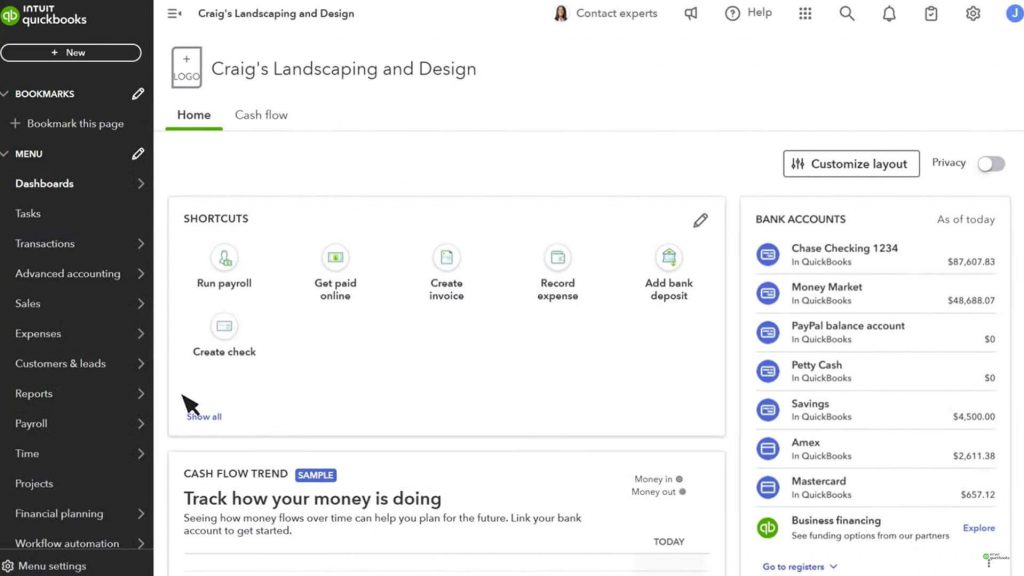
QuickBooks Online is Intuit’s cloud-based general ledger. For restaurants, the choice of plan depends largely on how many locations need reporting and how many people need access.
Type: General ledger · POS: via apps and connectors · Ledger: itself · From: $38/mo · G2: 4.0/5 (3,908 reviews)
Why restaurants choose it:
- Plus ($140/mo) supports up to 40 classes and locations combined, allowing restaurants to produce a P&L for each location.
- Advanced ($340/mo) removes that tracking limit and supports up to 25 users.
- Bookkeepers can manage a restaurant’s file alongside their other clients in QuickBooks Online Accountant.
Watch out for:
- Simple Start ($38/month) and Essentials ($85/month) don’t track classes or locations at all.
- Recipe costing isn’t included, and getting daily POS sales into the ledger requires a connector or manual journal entries.
Skip it if: You want food cost, inventory and accounting in one restaurant platform.
2. Xero: best for restaurant groups whose bookkeeper works in Xero
Source: Xero Accounting Software – YouTube channel
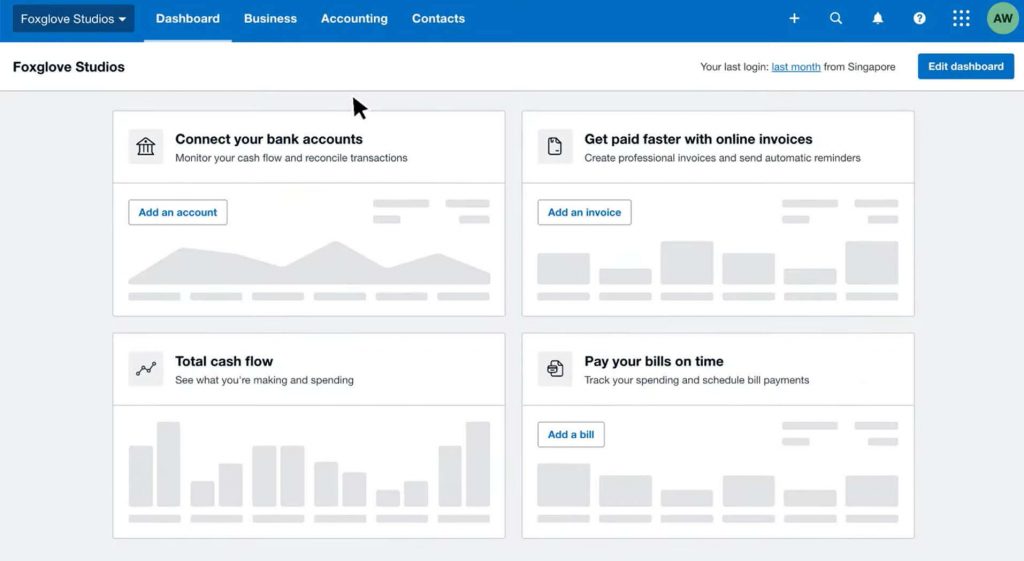
Xero is a cloud-based general ledger. Its US plans are called Early, Growing and Established.
Type: General ledger · POS: via apps and connectors · Ledger: itself · From: $27/mo · G2: 4.4/5 (1,854 reviews)
Why restaurants choose it:
- Xero has no per-user license fee, so a manager or bookkeeper can be added without another user charge.
- Tracking categories let restaurants label transactions by location.
- Growing ($59/mo) removes the Early plan’s caps on bills and invoices.
Watch out for:
- Early ($27/mo) allows only 5 bills and 20 invoices, which is unlikely to cover a restaurant’s supplier activity.
- Recipe costing isn’t included, and daily POS sales need a connector or manual journal entries.
Skip it if: Your accountant only works in QuickBooks, or you need to consolidate several legal entities.
3. Synder: best for restaurant groups that keep QuickBooks or Xero and want daily POS sales posted automatically
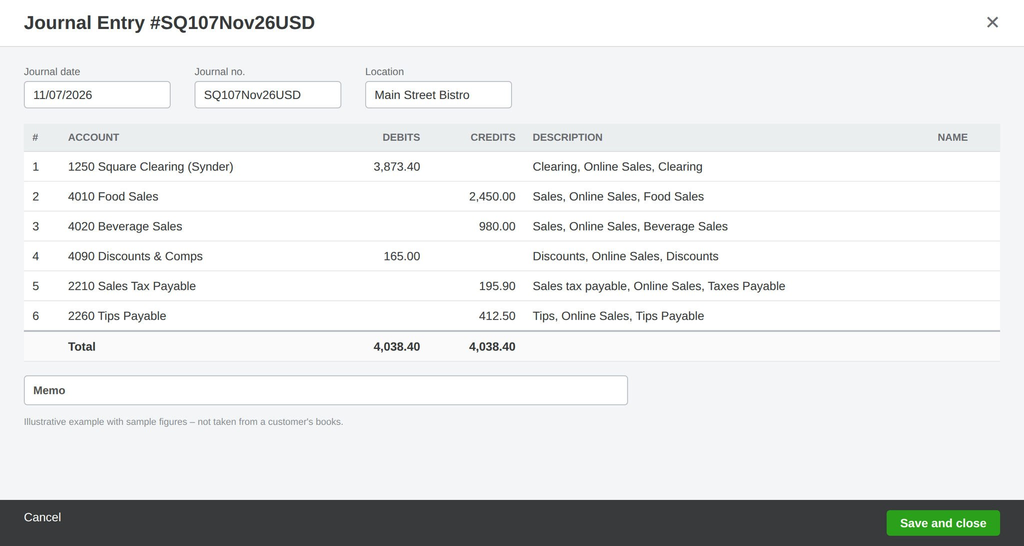
Source: Synder
Synder posts Toast, Square and Clover sales into QuickBooks Online, Xero or another existing ledger.
Type: POS-to-accounting connector · POS: Toast, Square, Clover · Ledger: QuickBooks Online, Xero and others · From: $52/mo billed yearly · G2: 4.7/5 (251 reviews)
Why restaurants choose it:
- Toast: one entry per location per day (Summary Sync) or every check (Per Transaction mode).
- Square: card, cash, tip and refund transactions sync about once an hour.
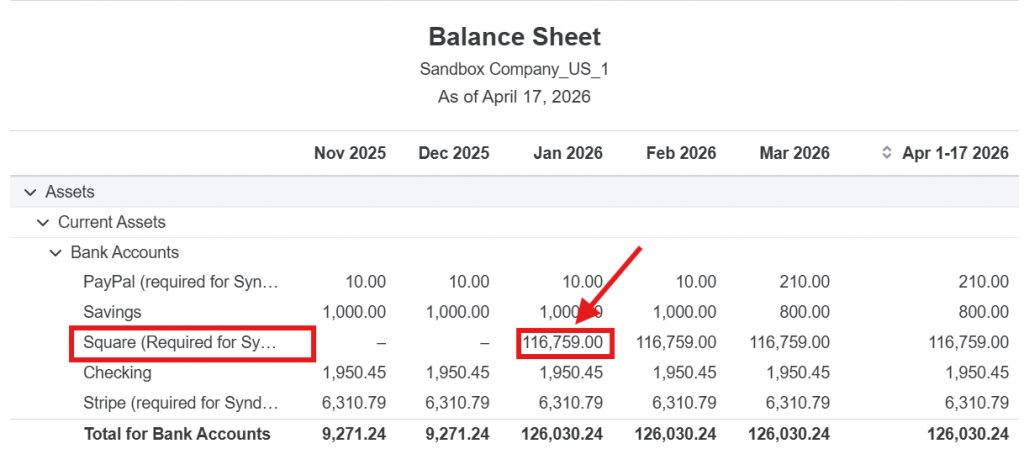
- Deposits post at the exact bank amount through a clearing account, with tips and sales tax split out.
Watch out for:
- Synder needs a separate ledger.
- With Clover, only gross amounts sync; fees and payouts are entered manually.
Skip it if: You want recipe costing and AP in one system, or sell mostly through DoorDash or Uber Eats.
Prince Edward Island Preserve Company replaced spreadsheet macros with Synder and saves 110+ hours a month. Cam Beck, its Management Consultant, said:
You have no idea how much easier Synder has made our lives.
Cam Beck, Management Consultant at Prince Edward Island Preserve Company
You can try Synder free for 15 days.
4. Sage Intacct: best for restaurant groups with several legal entities
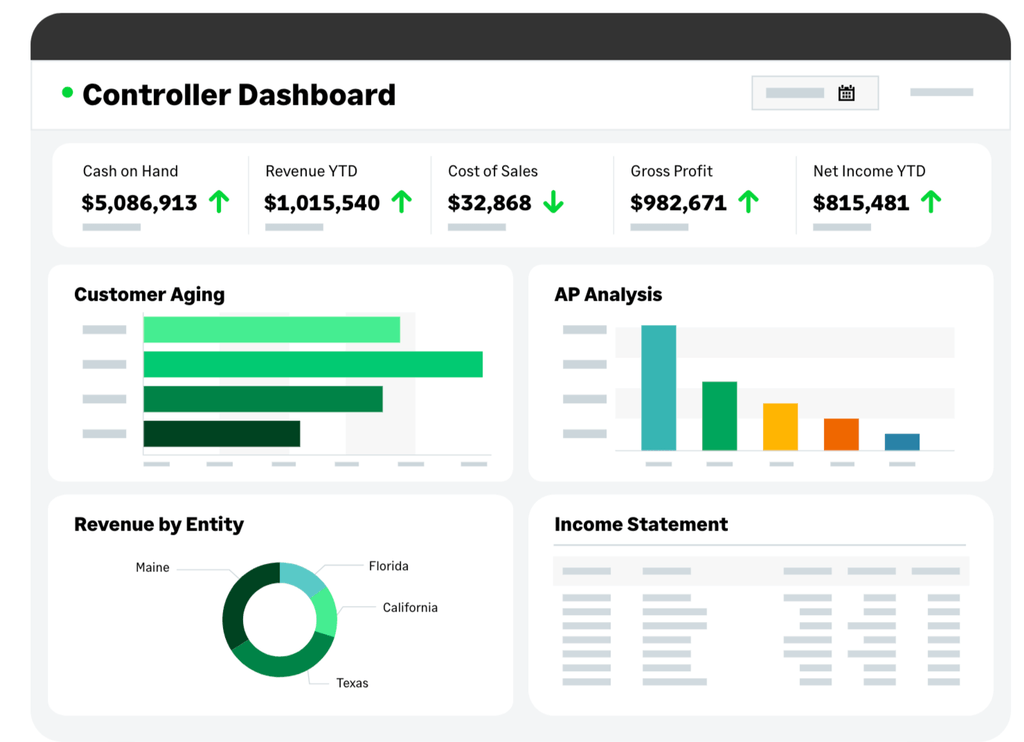
Source: Sage Intacct website
Sage Intacct is a mid-market accounting system designed for businesses with several legal entities or franchise locations.
Type: Multi-entity ledger · POS: daily sales and tender import · Ledger: itself · From: quote-based · G2: 4.3/5 (4,536 reviews)
Why restaurants choose it:
- Sage says it can manage “dozens of entities, brands, and concepts from one cloud platform.”
- Automated eliminations and allocations help shorten the consolidated close.
- Reports can be filtered by store, region and concept.
Watch out for:
- Pricing isn’t publicly available, so you’ll need to speak to sales to get a quote.
- Recipe costing and invoice capture require additional tools.
Skip it if: You operate one legal entity and QuickBooks Online Plus already meets your location-reporting needs.
5. Restaurant365: best for groups that want one platform to replace the ledger and manage the back office
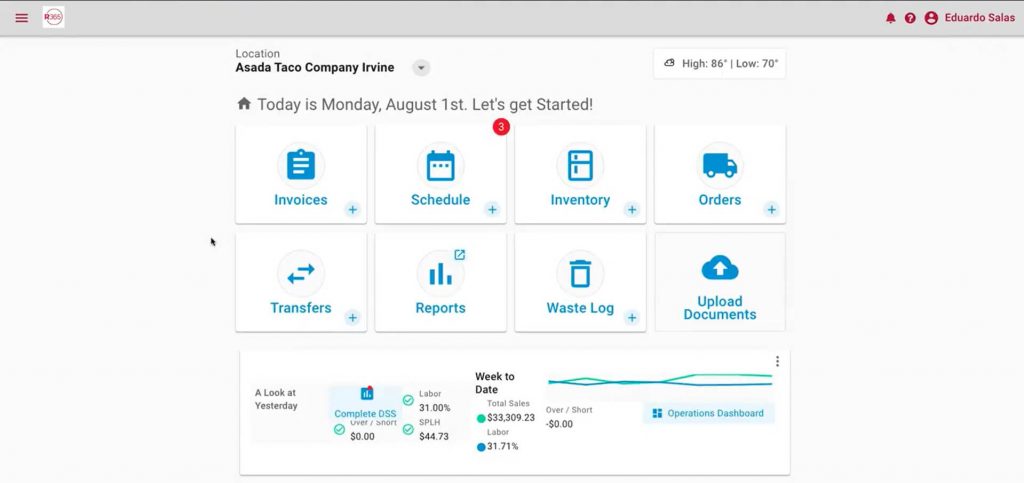
Source: Restaurant365 – YouTube channel
Restaurant365 combines restaurant accounting with operational tools. It includes its own general ledger and a chart of accounts designed for restaurants.
Type: All-in-one restaurant platform · POS: Square and other POS integrations · Ledger: its own · From: pricing on request · G2: 4.6/5 (325 reviews)
Why restaurants choose it:
- Accounting, inventory, purchasing, workforce management, payroll and HR are available in one product.
- The general ledger includes a chart of accounts set up for restaurant operations.
- Restaurant365 integrates with Square and other POS systems, so sales reach the books without a separate connector.
Watch out for:
- Moving to Restaurant365 means replacing your current ledger, so your accountant must also work in the new system.
- With Square, sales import once a day: the previous day’s data arrives at 4 a.m. local time by default.
- Pricing is available only through a custom quote.
Skip it if: Your accountant wants to continue working in QuickBooks or Xero.
6. MarginEdge: best for invoice-heavy kitchens that track food cost daily
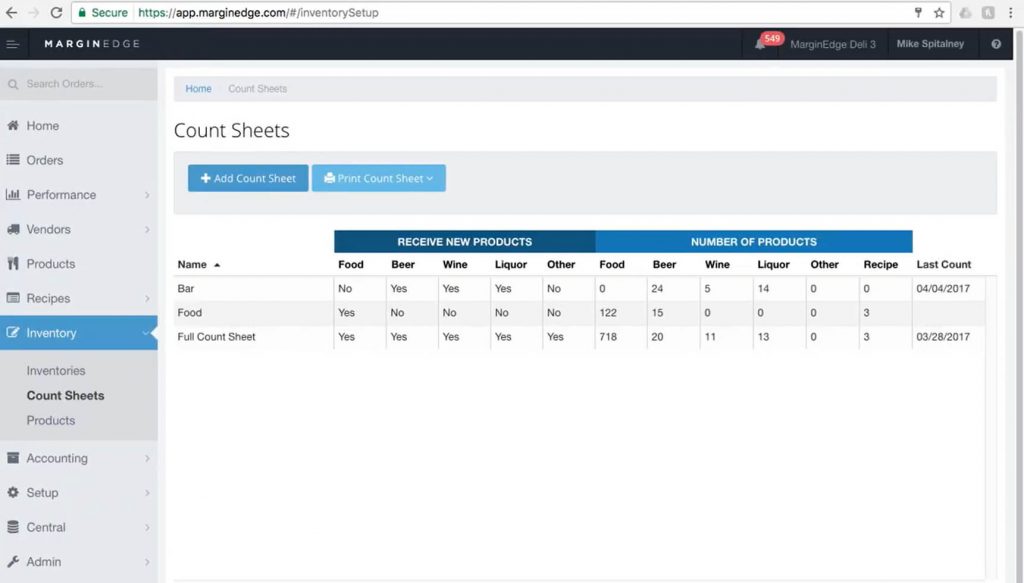
Source: MarginEdge – YouTube channel
MarginEdge focuses on the kitchen’s back-office work: supplier invoices, bill payments, inventory and recipe costing. It passes accounting data into an existing ledger rather than replacing it.
Type: AP & invoice automation · POS: Toast and other POS systems · Ledger: through accounting integrations · From: $350 per location/mo · G2: 4.6/5 (31 reviews)
Why restaurants choose it:
- The core plan includes unlimited invoice processing and unlimited bill pay in the US.
- Recipe management and menu analysis help calculate the cost of each dish.
- Annual subscriptions receive a 10% discount.
Watch out for:
- Toast users must also account for Toast’s $50/month per-location API integration subscription and a 10% pass-through API fee.
- The published pricing page doesn’t list a free trial.
Skip it if: You have one location and only a small number of suppliers.
7. Ottimate (formerly Plate IQ): best for groups with many vendors and bills across locations
Source: Ottimate
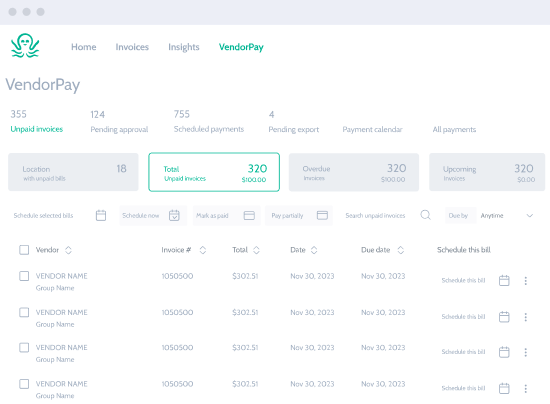
Ottimate automates accounts payable, including invoice capture, payments and approval workflows. It works alongside an accounting system rather than functioning as a ledger.
Type: AP & invoice automation · POS: not the focus · Ledger: through accounting integrations · From: contact sales · G2: 4.6/5 (210 reviews)
Why restaurants choose it:
- Invoice line items can be captured and mapped to general ledger accounts.
- Vendors can be paid by check, ACH or virtual card.
- Approval workflows can route invoices according to vendor, department or amount.
Watch out for:
- Ottimate doesn’t publish its pricing plans.
- It handles AP, so POS sales still need another route into the ledger.
Skip it if: Your restaurant has few enough suppliers to manage bills directly in QuickBooks Online or Xero.
How Toast, Square and Clover sales get into QuickBooks or Xero
Unless you choose Restaurant365, your POS data must reach a separate accounting system. The connection method affects how much manual reconciliation remains.
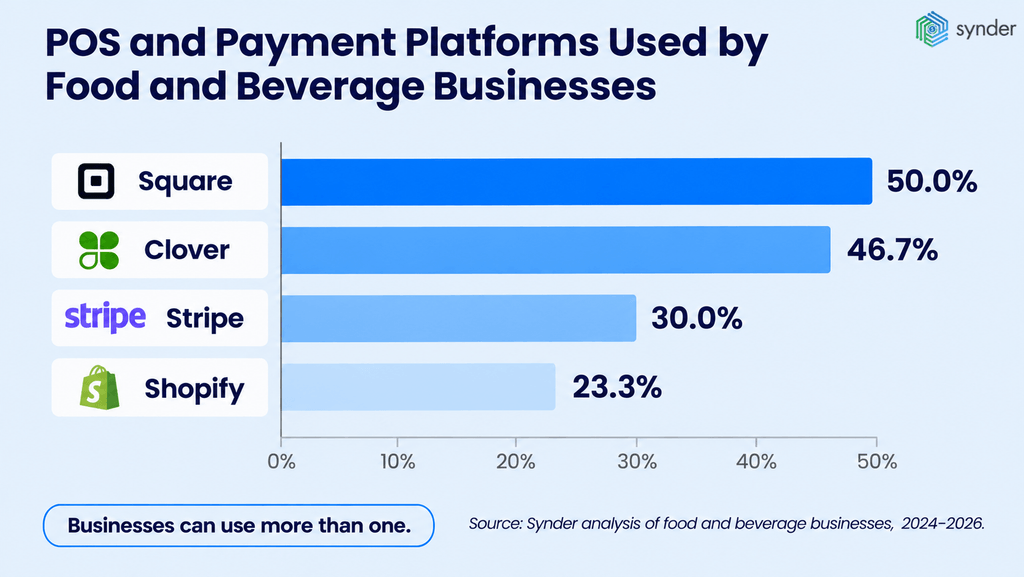
In Synder’s analysis of customer food and beverage businesses, Square (50.0%) and Clover (46.7%) were the most common POS systems, and 86.7% kept their books in QuickBooks Online.
With card transactions, the amount deposited in the bank often differs from the sales total because fees have already been deducted. The accounting connection needs to preserve those differences.
Each POS offers different ways to transfer data into a ledger, but the options vary in how they handle sales, fees and payouts.
| Connection option | POS covered | How it posts | Fees and payouts split | Ledgers |
| POS’s own export: Toast Accounting Sync | Toast | Journal entries each day for every business date (limited release) | You choose how fees and deposits post | QuickBooks Online only |
| POS’s own export: Intuit’s Connect to Square app | Square | Each transaction, or one daily summary | Matches sales to deposits; fee handling not stated | QuickBooks Online |
| POS-owned back office: xtraCHEF Sync by Toast | Toast | Daily sales journal entries by category | Not stated; needs a premium xtraCHEF subscription | QuickBooks Online |
| Third-party connector: Commerce Sync | Clover, Square | Automated daily sales transfer | Not stated | QuickBooks Online, Xero, QuickBooks Desktop |
| Third-party connector: Synder | Toast, Square, Clover | One entry per day per location, or every transaction | Toast and Square: yes, through a clearing account; Clover: gross only, fees and payouts manual | QuickBooks Online, Xero |
| All-in-one: Restaurant365 POS integrations | Square and other POS systems | Previous day’s sales imported once a day | Inside Restaurant365’s own ledger | Restaurant365 |
Several providers explain how they import sales but give little detail about what happens to fees and deposits. That makes it difficult to judge whether reconciliation is automated or whether someone will still need to match payouts manually. Check this during a trial using an actual settlement.
Bookkeeping for restaurants: how daily sales reconciliation works
Daily restaurant reconciliation checks whether POS sales and bank deposits agree after accounting for sales tax, tips, refunds and processing fees.
Processing fees are a significant expense for restaurants. More than nine in ten operators cite food, labor, insurance, energy and swipe fees as significant challenges, according to the National Restaurant Association’s 2026 State of the Restaurant Industry release. The association’s chief economist, Dr. Chad Moutray, said:
Success for operators this year will hinge on their ability to get the math right in a still-challenging economic environment.
Dr. Chad Moutray, Chief Economist of the National Restaurant Association
Delivery platforms introduce another deduction. According to an NRA survey from May 2026, two in three restaurant operators reported paying average third-party delivery commissions of 15% to 29.9% per transaction. Those commissions are deducted before the payout reaches the restaurant.
A daily reconciliation follows four steps:
- Pull the day’s POS sales. Start with the Z-report, the end-of-day POS report showing sales, taxes, tips and payment methods.
- Post gross sales to a clearing account. This temporary balance sheet account holds sales until the matching deposit arrives, then returns to zero.
- Split the deposit. Card payments are processed through end-of-day batch settlement, with processing fees and refunds deducted before payout. Record sales tax payable, tips owed to employees, processing fees and refunds separately.
- Match the net deposit to the bank. Compare the expected amount with the actual bank deposit and record any difference as a deposit adjustment.
QuickBooks users may consider putting POS payments into Undeposited Funds. This account holds payments until a deposit is recorded, but it doesn’t automatically account for processing fees deducted before settlement. Without a separate fee entry, the grouped payments won’t match the bank deposit.
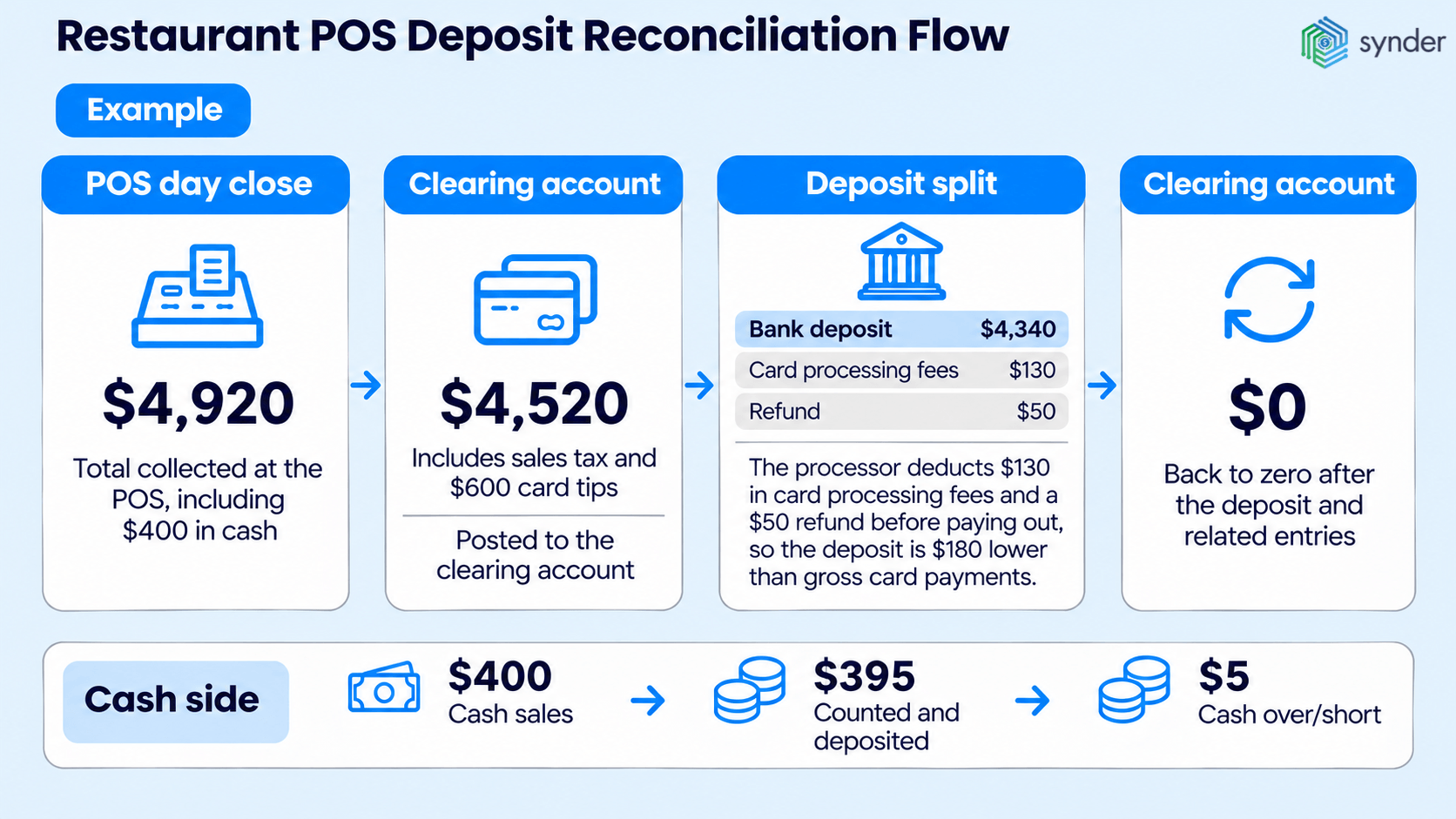
Here’s how one day of sales at a single location might reconcile. The amounts are rounded to make the calculation easier to follow.
| Example: one day, one location | Amount |
| Food sales | $3,000 |
| Beverage sales | $1,200 |
| Discounts and comps | −$200 |
| Net sales | $4,000 |
| Sales tax collected (8%) | $320 |
| Card tips owed to staff | $600 |
| Total collected at the POS | $4,920 |
| Cash sales taken in the drawer (counted $395, deposited separately) | −$400 |
| Card payments in the clearing account | $4,520 |
| Card processing fees | −$130 |
| Refund of an earlier check | −$50 |
| Expected card deposit | $4,340 |
| Bank deposit | $4,340 (difference: $0) |
The expected deposit matches the bank because the $130 in processing fees and $50 refund have been recorded separately. Leave either amount out and the deposit appears short, with no corresponding entry to explain the difference.
What a daily sales entry should look like
After reconciling the day’s activity, the amounts can be recorded in the ledger as two entries per location: one for the day’s sales and one for the deposit. Here’s how the same example would appear, with each line tagged to the appropriate location.
Entry 1: the day’s sales
| Account | Debit | Credit | Location |
| POS clearing account (card payments) | $4,520 | Location A | |
| Cash deposit | $395 | Location A | |
| Cash over/short | $5 | Location A | |
| Discounts and comps | $200 | Location A | |
| Food sales | $3,000 | Location A | |
| Beverage sales | $1,200 | Location A | |
| Sales tax payable | $320 | Location A | |
| Credit card tips payable | $600 | Location A | |
| Total | $5,120 | $5,120 |
The drawer held $395 against $400 in cash sales, so the $5 shortfall posts to cash over/short.
Entry 2: the card deposit
| Account | Debit | Credit | Location |
| Bank | $4,340 | Location A | |
| Card processing fees | $130 | Location A | |
| Refunds | $50 | Location A | |
| POS clearing account | $4,520 | Location A | |
| Total | $4,520 | $4,520 |
After the deposit entry, the clearing account is back to zero.
There are three additional setup decisions to consider:
- Daily summary or per transaction: One entry per day per location keeps the ledger manageable. Per-transaction posting is useful when every individual check needs to appear in the books.
- Tip records: Accurate tip tracking also matters for payroll and taxes. Under the “No Tax on Tips” deduction, employees can deduct up to $25,000 in qualified tips, including shared tips, according to the IRS (March 5, 2026).
- A test month for bookkeepers: Run the previous process alongside the new setup for one month and compare the results day by day.
Multi-location groups, bars and cafes
For restaurants with multiple locations, each accounting entry needs to be assigned to the correct site. The software also needs to support the volume of transactions generated across the group.
Running several locations
Location reporting depends on accurate transaction tagging. Without it, a restaurant group can’t produce reliable P&Ls for individual sites.
In QuickBooks Online, class and location tracking begin with Plus, which supports a combined total of 40 classes and locations. Advanced removes that limit.
The main approaches are:
- QuickBooks Online: Assign daily entries to classes or locations and run a P&L by location.
- Xero: Assign transactions to locations using tracking categories.
- Several legal entities: Maintain a ledger for each entity, record intercompany transactions and prepare consolidated P&Ls using Sage Intacct.
Location tags don’t account for shared expenses automatically. A central kitchen or head office may support multiple sites, so its costs need to be allocated across locations to get an accurate view of profitability.
Accounting software for bars, pubs and cafes: what changes
Bars, pubs and cafés use many of the same accounting entries as restaurants, but they often process large numbers of relatively small transactions. That can make transaction limits particularly important when comparing accounting software for cafes. Synder’s Basic plan, for example, includes 500 synced transactions.
Beverage revenue also needs to be categorized. The Uniform System of Accounts for Restaurants (USAR), published by the National Restaurant Association, provides a standard restaurant chart of accounts with separate categories for different beverages.
| Account | Type |
| Beer sales | Revenue |
| Wine sales | Revenue |
| Liquor sales | Revenue |
| Beverage cost of goods sold: beer, wine, liquor | Cost of goods sold |
These accounts support pour-cost calculations. Pour cost is the cost of liquor poured divided by the revenue from those drinks, with inventory counts supplying the cost figure.
Bars also need to track pooled tips as a liability until staff receive them through payroll.
If a bar uses a POS such as TouchBistro, sales still need to reach the ledger through the POS system’s export or a third-party connector, just as they would with Toast or Square.
Catering accounting software has a different focus. Caterers invoice clients for events instead of closing a POS day, so a general ledger with invoicing, such as QuickBooks Online or Xero, covers most of the work, and daily POS posting matters less.
Recommended stacks by restaurant setup
Three of the seven products in this comparison work alongside a general ledger rather than replacing it. As a result, many restaurants need a combination of tools rather than a single product.
The examples below use verified prices. Payroll tools such as Gusto and AP products such as BILL are optional and priced separately.
| Setup | Ledger | POS sync | AP & food cost | Payroll | Monthly cost (from) |
| Multi-location group on Toast or Square keeping QuickBooks | QuickBooks Online Plus ($140) | Synder (from $52 billed yearly) or xtraCHEF Sync | MarginEdge ($350 per location), optional | Gusto or QuickBooks Payroll | $192 + per-location add-ons |
| Group with several legal entities | Sage Intacct (quote) | Connector or Sage POS import | Ottimate or MarginEdge | Gusto | Quote-based |
| Bar or café group | QuickBooks Online Plus ($140) or Xero Growing ($59) | Connector priced by volume | Optional | Gusto | $59-$140 + connector |
| Group consolidating onto one platform | Restaurant365 | Built in | Built in | Built in | Pricing on request |
| Bookkeeping firm with restaurant clients | QuickBooks Online Accountant + client QuickBooks Online files | One connector set up the same way for every client | Per client | Per client | Per client |
For bookkeeping firms working with several restaurant clients, QuickBooks Online Accountant offers a way to manage client files in one place. A consistent connector setup for each client, followed by a test month before going live, can make monthly bookkeeping more repeatable.
Restaurant365 or a stack?
The decision between Restaurant365 and a ledger with add-ons depends largely on whether the restaurant is prepared to move away from its current accounting system.
Restaurant365 replaces the ledger and brings restaurant operations into the same platform. A stack keeps the existing ledger and adds specific functions as needed.
| Factor | Restaurant365 | Ledger + add-ons |
| What it replaces | Your current ledger and back-office tools | Nothing; the ledger stays |
| Food cost and recipes | Built in | Added through MarginEdge or similar |
| Setup effort | Full migration | One add-on at a time |
| How it’s priced | Custom quote | Per month, per location or by transaction volume |
How we compared these tools
Because Synder is one of the products reviewed, we’ve published the criteria used to evaluate all seven tools.
We assessed them against the six checks in the buying checklist, with the following weights:
| Criterion | Weight |
| POS coverage | 25% |
| Daily posting and reconciliation | 25% |
| Multi-location support | 15% |
| Price at your volume | 15% |
| AP and inventory | 10% |
| User ratings | 10% |
Our sources were vendor pricing pages, help documentation and G2, applied consistently across all seven products. Prices were checked on November 10, 2026.
Synder was evaluated against the same criteria, including the limitations listed in its individual review.
We haven’t published an overall score because quote-based products can’t be compared on price in the same way as those with published subscription rates.
Bottom line: which restaurant accounting software should you choose?
The best bookkeeping software for restaurants depends on what your business already uses and which tasks still require manual work.
- You want to keep QuickBooks or Xero: Automate daily POS posting with a connector.
- You have several legal entities: Consider a multi-entity ledger such as Sage Intacct.
- You want one platform that includes food cost: Restaurant365 combines accounting with restaurant operations.
- Your kitchen is invoice-heavy: Add MarginEdge or Ottimate to your ledger.
Before committing, run one real business day through the software. Compare the resulting entries with your POS report and check that the expected deposit matches the bank to the penny.
FAQ
Is QuickBooks Online enough for a restaurant?
QuickBooks Online can serve as a restaurant’s general ledger. Multi-location reporting requires Plus ($140/month), which supports up to 40 combined classes and locations, or Advanced ($340/month), which provides unlimited tracking. Daily POS sales still need to reach QuickBooks through a connector or manual journal entries.
How much does restaurant accounting software cost?
Restaurant accounting software uses several pricing models. General ledgers charge monthly subscriptions, with QuickBooks Online starting at $38/month. Per-location tools such as MarginEdge cost $350 per location per month. Restaurant365 and Ottimate use custom quotes. POS connectors may charge based on transaction volume, with Synder starting at $52/month billed annually. Prices were checked on November 10, 2026.
How should a restaurant record tips?
Tips collected for employees should be recorded as a liability in a tips payable account, not as restaurant revenue. The liability is cleared when tips are paid through payroll. The daily sales entry example includes the corresponding tips payable line.
How do you record DoorDash and Uber Eats payouts?
Record gross delivery sales, recognize the platform’s commissions and fees as expenses, and account for the net payout through a clearing account. Synder doesn’t currently offer direct integrations with DoorDash, Uber Eats or Grubhub, so those transactions need to remain in the restaurant’s existing process.
What should a bookkeeping firm look for in a POS-to-QuickBooks sync tool?
A bookkeeping firm should look for five things: no missing business days, mapping to the client’s existing accounts, totals that reconcile to the POS end-of-day report, the ability to run a test month before going live, and a dashboard for managing multiple clients.