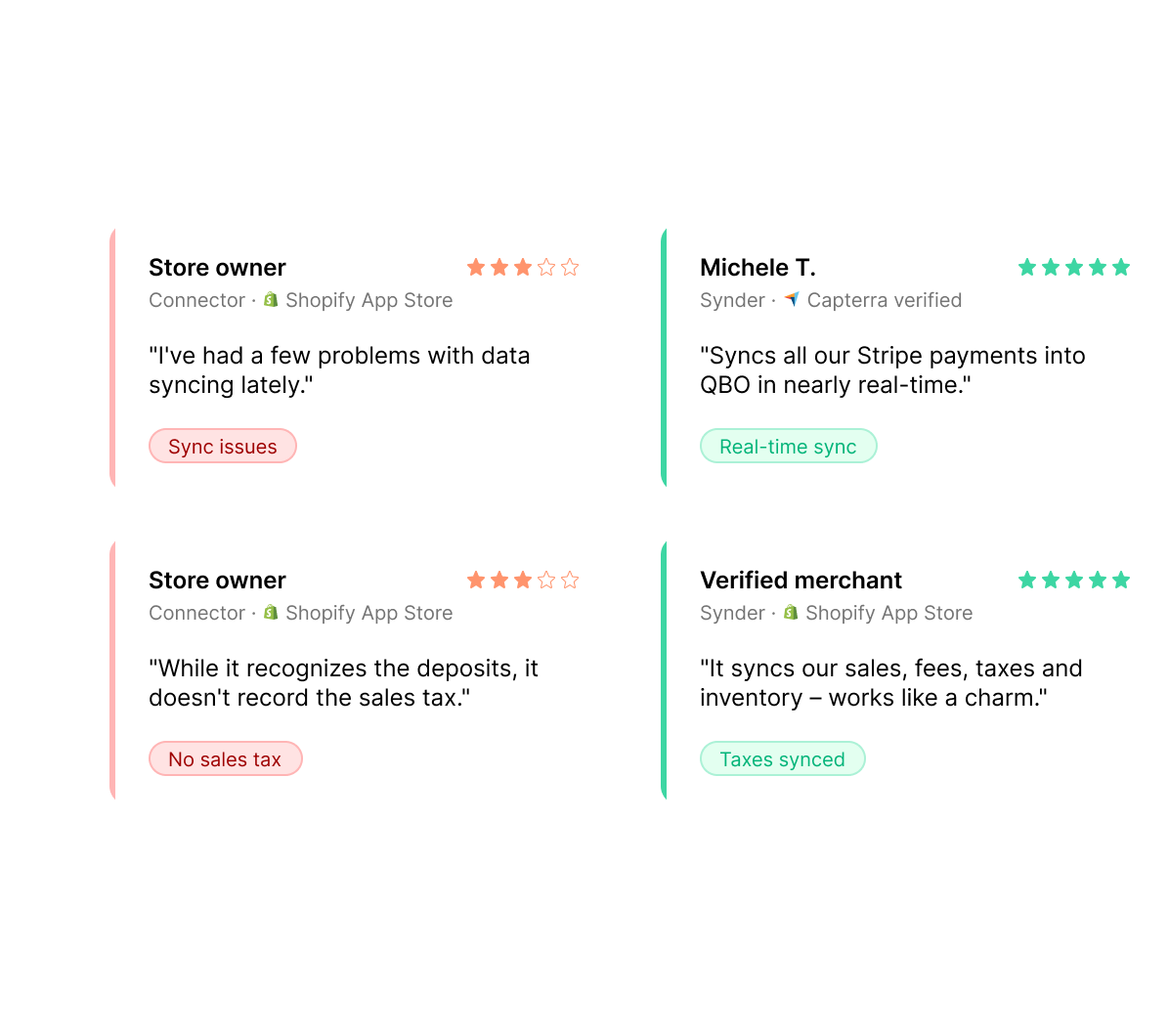
Both tools sync Shopify with QuickBooks Online, but they serve different problems. The Connector by QuickBooks is a free option for simple stores, while Synder supports multichannel businesses with advanced automation and reconciliation.
Book a demo to see it liveAccuracy in syncing sales data
Saved yearly on bookkeeping
Saved on month-end close


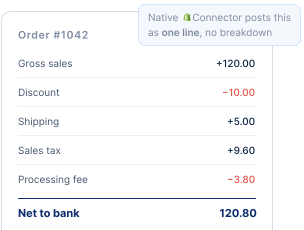
Synder records sales, refunds, fees, taxes, and discounts as separate components within each transaction, giving you a clear audit trail. The Connector posts mostly net summaries you'll have to investigate later.
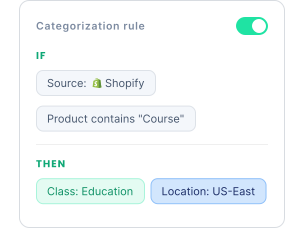
Build rules that automatically categorize, tag, or apply classes, locations, and memos based on your own criteria. This is a Per Transaction feature, and it's something the native Connector doesn't offer.
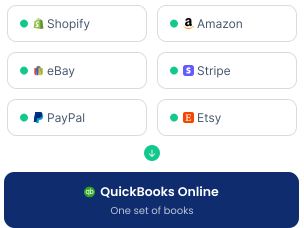
The Connector handles Shopify only, with each store as its own separate setup. Synder brings Shopify, Amazon, eBay, Stripe, PayPal, and more into one QuickBooks Online company, so adding a channel or processor doesn't mean another tool.
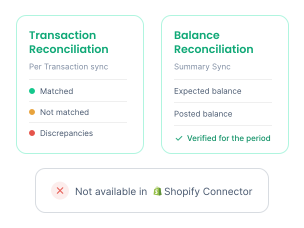
In Per Transaction sync, Synder's Transaction Reconciliation cross-checks your clearing account against your Stripe and Shopify reports, flagging matched, missing, and discrepant transactions. Summary Sync users get Balance Reconciliation to verify summaries against expected period balances. The native Connector offers neither.
The Shopify Connector by QuickBooks works well for single-store businesses that need a simple, free connection to QuickBooks Online. Synder is better suited to growing businesses that sell across multiple channels or need more detailed syncing, automation, and reconciliation.
The switch is simple, and your history stays intact. Start in QuickBooks Online by pausing or disconnecting the Shopify Connector by Intuit so both tools don't post to the same period and create duplicates. Make a note of the last date the Connector synced. Then connect Shopify and QuickBooks Online to Synder and open your sync settings, picking Per Transaction for line-item detail or Summary Sync for consolidated entries. Summary Sync lets you map accounts directly, while in Per Transaction the affected accounts come from the product in QuickBooks Online, your tax setup, and related configurations, though several can still be adjusted in the settings. From there, run a Historical Data Import to pull in transactions starting from your Connector cutoff date, leaving no gap in your books. Check the imported entries before syncing them to QuickBooks, add any automation rules you want for categorization, and reconcile the first period to confirm everything ties out. Synder's support team can guide you through the cutover for a clean handoff.
Only if both tools sync the same period. Disconnect the Connector first and start your Synder historical import from the day after the Connector's last sync. That single cutoff date keeps each transaction in QuickBooks once.
No, the Shopify Connector for QuickBooks Online connects to QuickBooks Online only. Intuit offers a separate QuickBooks Desktop Connector app for Desktop users. Synder supports both QuickBooks Online and QuickBooks Desktop, along with Xero, Oracle NetSuite, Sage Intacct, Intuit Enterprise Suite, and Puzzle.
Yes. The native Connector posts mainly at the payout and daily-summary level. Synder's Per Transaction mode records each sale with products, taxes, fees, and customer data, and you can switch to Summary Sync when you'd rather post consolidated entries.
Synder is a paid app starting at $52/mo, while the Connector is free with a QuickBooks Online subscription. The value of Synder comes from multichannel coverage, transaction detail, automation rules, and reconciliation-ready records that the free tool doesn't provide.
Yes. Synder supports multi-client management, real-time imports, automation rules, and duplicate detection, plus a Partner Program for accounting professionals.