Two tools, one goal: get your ecommerce transactions into your accounting system without touching a spreadsheet. The differences show up in how deep the data goes, how many books you can post to, and whether you can catch mismatches before they land in your GL or after.
Book a demo to see it liveAccuracy in syncing sales data
Saved yearly on bookkeeping
Saved on month-end close

.png)
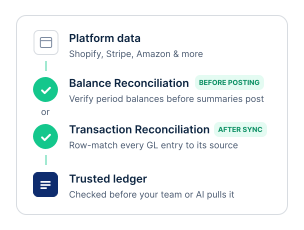
Synder gives you two built-in checkpoints. Verify period balances against your platform before summaries post. Row-match every GL entry against the source integration afterward. Whatever your AI agent or your controller pulls from the ledger has already been checked.
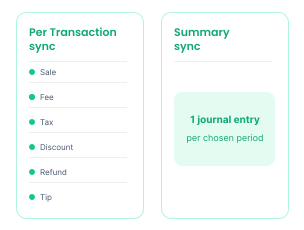
Per Transaction sync posts every sale, fee, tax, discount, refund, and tip as its own entry inside your accounting platform, so any transaction is can be traced back to its source. Summary Sync rolls the chosen period into a single clean journal entry when you want less noise in the GL.
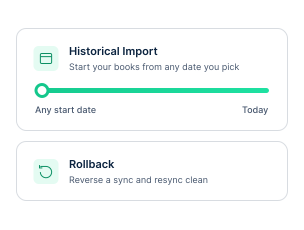
Synder imports historical data at any depth you pick, so your books can start from any date, not just the day you signed up. Made a mistake or reconfigured a rule? Rollback reverses what was synced and lets you resync clean.
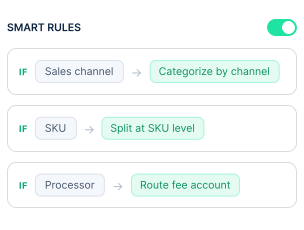
Smart Rules let you decide how each transaction gets categorized, tagged, split, or memoed – based on any conditions you set. Sales by channel? SKU-level splits? Fee accounts by processor? Build the logic once, and every future transaction follows it.
Blue Onion is a fit for larger DTC brands with in-house finance teams. Synder is the better call when you want line-item detail in your books, verified data your team and your AI can trust, and the flexibility to grow across ecommerce, SaaS, and subscriptions.
For teams that want full transaction detail landing inside their accounting software, hourly sync, and one tool that grows across ecommerce, SaaS, and subscriptions, Synder tends to come out ahead. Blue Onion is a good alternative for larger DTC brands with in-house finance teams that prefer a subledger paired only with daily summary entries.
With Per Transaction sync, every sale, fee, tax, discount, refund, and tip lands in your accounting platform as its own line – tied to the original Shopify, Stripe, or Amazon transaction. With Summary Sync, you get one clean journal entry per certain period or payout when you want less noise. Both modes carry a full audit trail.
Balance Reconciliation checks the period's starting and ending balances against your platform before summaries post. Transaction Reconciliation matches every GL entry to the source integration after sync, flagging any mismatches into four buckets (Matched, Discrepancy, Missing-in-accounting, Missing-in-integration). Both come with a downloadable audit trail.
Yes. Synder ships a dedicated ASC 606 / IFRS 15-compliant revenue recognition engine with deferred revenue reporting, built for pure SaaS and hybrid subscription-plus-ecom businesses. It handles subscription changes (upgrades, downgrades, prorations, cancellations) automatically, not just at the summary level.
Yes. Synder's Partner Program gives accounting firms serving multiple clients priority support, a dedicated account manager, prioritized feature requests, and volume discounts across all plans. It's built for teams that manage bookkeeping for many clients at once, not only in-house finance teams at a single brand.
Synder records marketplace facilitator tax collected by Amazon, Etsy, eBay, TikTok Shop, and other marketplaces, so it doesn't double-book as revenue on your P&L. It also supports US sales tax, VAT, GST, Canadian tax per state, and multi-currency with automatic conversion.