Both tools sync Amazon data with QuickBooks Online, but they target different types of businesses. The Amazon Connector by QuickBooks is a free option for a single Amazon account, while Synder supports multiple sales channels with detailed accounting and reconciliation.
Book a demo to see it liveAccuracy in syncing sales data
Saved yearly on bookkeeping
Saved on month-end close


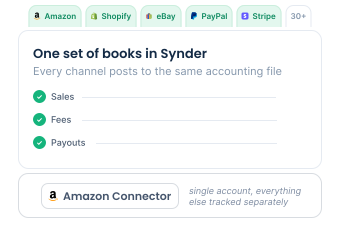
Synder connects 30+ marketplaces, storefronts, and payment processors, including Amazon, Shopify, eBay, Walmart, PayPal, and Stripe, bringing every channel into one set of books. The Amazon Seller Connector ties to a single Seller Central account, so anything you sell elsewhere has to be tracked separately.
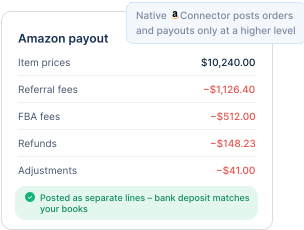
Each Amazon payout gets split into item prices, referral and FBA fees, refunds, and adjustments, posted as separate lines so the deposit in your bank matches your books without hand-sorting thousands of rows. The native connector brings in orders and payouts at a higher level, leaving the makeup of each deposit for you to untangle.
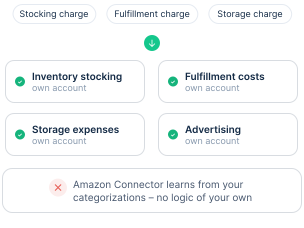
Synder lets you write rules that classify transactions on criteria you define, including classes, locations, and custom fields, so stocking, fulfillment, storage, and advertising charges route to their own accounts. The native connector tracks products and learns from your categorizations but adds no logic of your own.
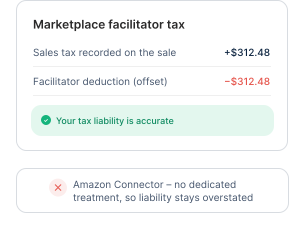
When Amazon collects and remits sales tax for you, Synder records the tax on the sale and offsets it as a facilitator deduction, keeping your liability accurate instead of overstating what you owe. The native connector offers no dedicated treatment for this.
Note: Feature details for the Amazon Seller Connector by QuickBooks reflect Intuit's published documentation at the time of writing and may change.
See allThe Amazon Seller Connector by QuickBooks is a solid free option for sellers running a single Amazon account on QuickBooks Online who don't mind some manual review. Synder is better suited to businesses with higher sales volume, multiple channels, more complex accounting needs, or a need to automate settlement breakdowns and reconciliation.
QuickBooks Online offers the Amazon Seller Connector by QuickBooks, a free Intuit app that imports orders and payouts from one Amazon Seller Central account. It is a basic sync rather than a full accounting workflow, and QuickBooks Desktop has no native Amazon connection at all, so Desktop sellers need a third-party tool. Synder works with both the cloud accounting systems sellers use and brings Amazon in alongside every other channel.
Synder is an accounting automation platform that connects 30+ marketplaces, online stores, and payment providers to your accounting system. For Amazon sellers, it reads your settlement reports, breaks each payout into sales, fees, refunds, and taxes, and posts them to the right accounts, while also bringing in any other channel you sell on. It works with QuickBooks Online, Xero, Sage Intacct, Oracle NetSuite, Intuit Enterprise Suite, and Puzzle.
It is a free app built by Intuit, also listed as the Amazon Marketplace Connector, that imports orders and payouts from one Amazon Seller Central account into QuickBooks Online. Each transaction passes through a confirm-and-review queue before posting, and it works only with QuickBooks Online, not with other accounting systems or other sales channels.
They solve opposite problems. The Amazon Business Purchases app tracks what you buy on Amazon for expense categorization and needs an Amazon Business account. The Amazon Seller Connector imports what you sell through Seller Central. If you sell on Amazon, the Seller Connector or a platform like Synder is what you want, not the Business Purchases app.
Synder parses the settlement report and posts referral fees, FBA fees, storage and advertising charges, refunds, and adjustments as their own lines, so each fee type goes to the right account. The native connector groups payouts into broad buckets such as sales, selling fees, and fulfillment fees, leaving much of the sorting to manual review.
Yes. Synder records marketplace facilitator tax on the sale and offsets it, and matches payouts across currencies, so international and multi-state sellers keep accurate books. The native connector's handling of facilitator tax and multiple currencies is limited, which can leave tax accounts overstated or payouts hard to match.
Some of the delay is Amazon's own: fees and payouts stay pending until Amazon releases the settlement report, roughly every two weeks, so no tool can finalize that detail sooner. Where tools differ is everything around it. A basic connector waits on the settlement and posts in bulk, while Synder imports orders on an hourly basis in Per Transaction mode and applies settlement fees once Amazon releases them, or, in Summary Sync, posts a clean aggregated entry per payout or period. Either way you get a clearer running picture than a single end-of-cycle dump.
Yes. Synder tracks COGS and inventory and matches products by SKU, which keeps your balance sheet and profitability closer to reality. The native connector's FBA inventory and cost-of-goods tracking is limited, so many sellers expense inventory immediately and lose an accurate margin picture.
Connect your Amazon Seller Central account and any other channels you sell on, then link your accounting system. Choose a cutover date, pull in prior activity with historical import so past settlements carry full fee and tax detail, and set your categorization rules before going ahead. If a batch posts wrong, one-click rollback lets you reverse it and rerun.