

Overview
With your company and accounts connected, you can start customizing the PayPal–Xero integration settings. These settings determine how Xero records transactions, invoices, fees, expenses, and payouts.
PayPal settings are organized in the following sections:
Plan availability:
- * Available from the Essential plan and higher
- ** Premium feature available only on Pro and Premium plans
How to Access PayPal Settings
To access your PayPal settings in Synder:
Option 1: From the main menu
- Select the appropriate organization from the top-left corner
- Click Settings in the left-hand menu
- Choose PayPal from the dropdown list
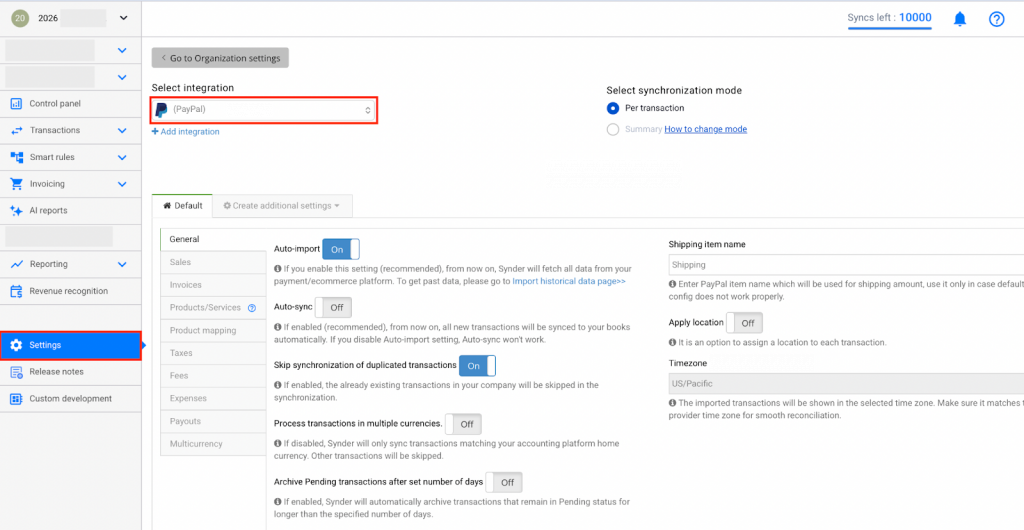
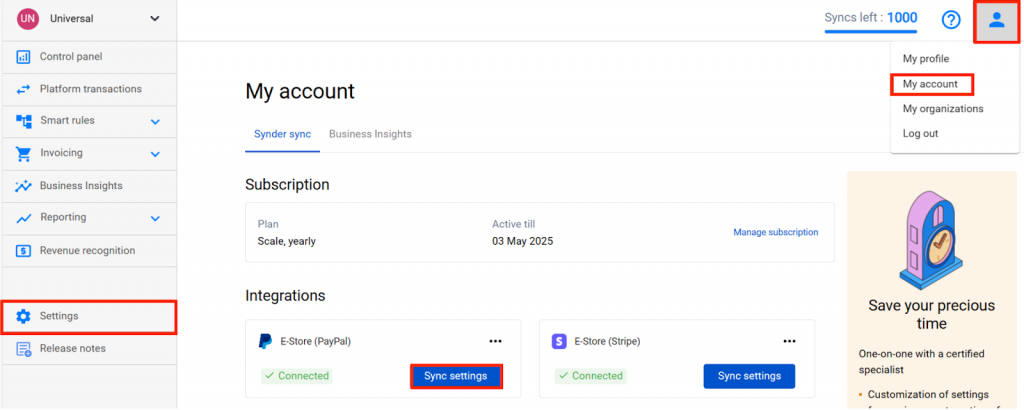
Option 2: From Organization Settings
- Click the person icon in the upper-right corner
- Select Organization settings
- Click Sync settings under PayPal
1. General settings
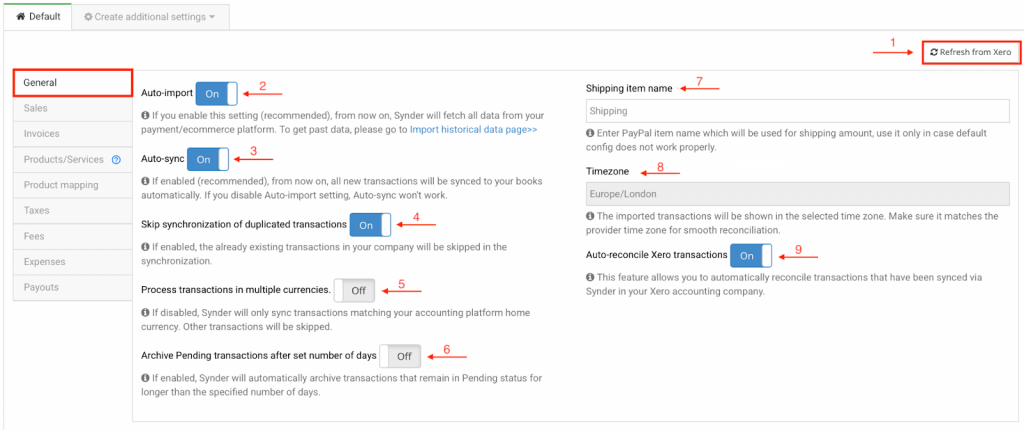
- Refresh from Xero – to apply any changes you make in Xero, you’ll need to manually refresh the Synder settings cache. Learn more about How to Update Your Xero Settings.
- Auto-Import – When ON, Synder automatically imports transactions from your PayPal integration without affecting your sync balance or syncing them to Xero. When disabled transaction imports are manual on Synder.
- Auto-sync – When ON, Synder automatically syncs transactions after import. When OFF, you will sync transactions manually by individually selecting them from the platform transactions tab
- Skip synchronization for duplicated transactions * – When enabled, Synder skips transactions that already exist in Xero with the same ID, preventing duplicates.
- Process transactions in multiple currencies – When enabled, Synder syncs all transactions regardless of currency. When disabled, Synder syncs only transactions in your home currency.
- Automatically Archive Pending Transactions – When enabled, Synder removes pending PayPal transactions that PayPal never finalized, keeping your Synder dashboard clean.
To manually archive a transaction, go to the Platform Transaction tab, locate the transaction, click the three dots next to it, and select Archive. - Shipping item name * – Enter the PayPal item name used for shipping. Use this setting only if shipping appears as a line item in your sales transactions. If PayPal records shipping in the shipping field, no additional setup is required.
- Timezone – Displays your PayPal account’s timezone to help match dates between PayPal and Xero.
- Auto-reconcile Xero transactions –This feature automatically reconciles transactions synced via Synder in your Xero accounting company.
2. Sales
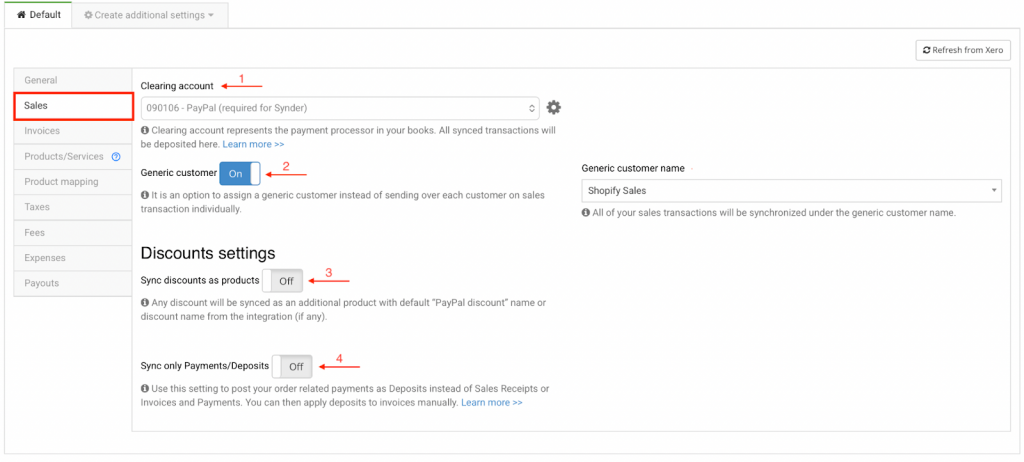
- Clearing account – A buffer account where Xero sales receipts, refund receipts, fees, and payments are deposited before being transferred to your main accounts.
- Apply generic customer * – When ON, all transactions are assigned a generic customer name to keep your Xero customer list organized. Choose or enter a default name, such as “PayPal Customer,” to apply to all transactions.
- Sync discounts as products ** – Discounts can be synced as separate products, such as “PayPal Discount,” for detailed tracking on your Profit & Loss report.
- Sync only Payments/Deposits * – Enable this setting to record order-related payments as Receive Payments instead of Sales Receipts or Invoices and Payments. You can then apply them to invoices manually. See our guide for more details about this feature: Syncing PayPal Shopping Cart Payments as Deposits/Overpayments in Synder.
3. Invoices
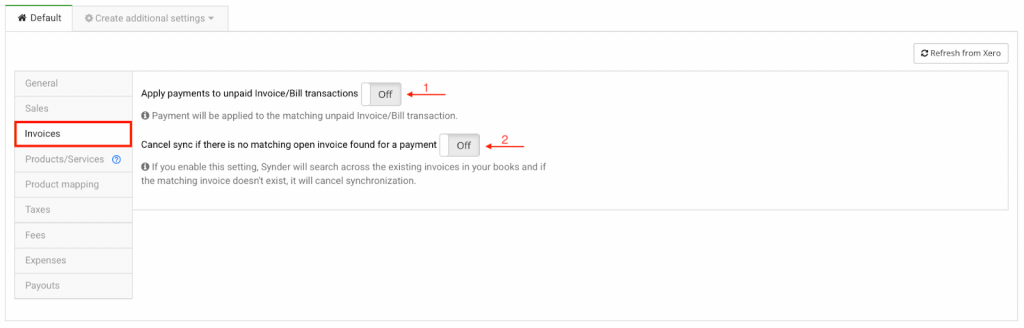
- Apply payments to unpaid Invoice/Bill transactions * – When ON, payments that match an unpaid invoice on your books are applied automatically, ensuring invoices are closed correctly.
- Cancel sync if there is no matching open invoice found for a payment * – If a payment doesn’t match any open invoice, it won’t sync, preventing incorrect entries.
4. Products and Services
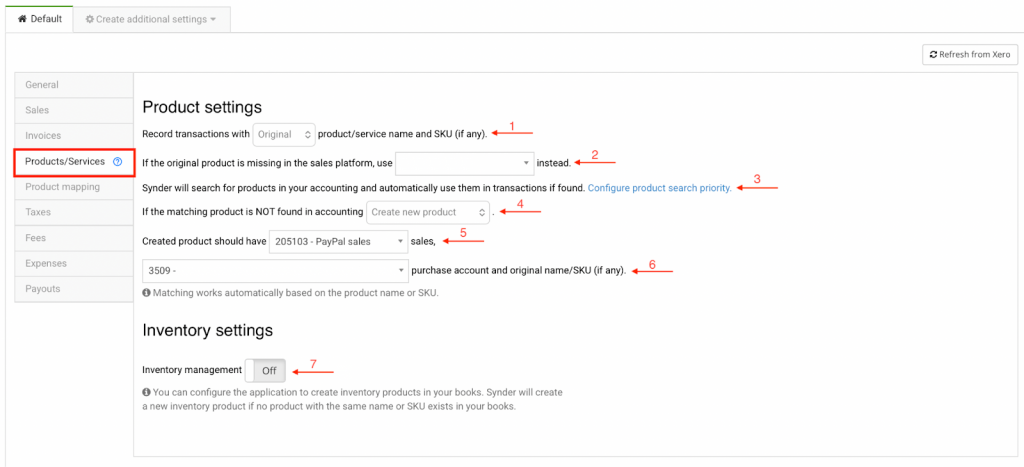
- Record transactions with Original/Common product/service name and SKU – Choose whether Synder records transactions using the original product name or a common product name. Synder matches original names to existing products in your accounting software by name or SKU and creates a new product when no match exists. Common product names help standardize future transactions.
- If the original product is missing from the sales platform, Synder will use the selected item or SKU.
- Configure product search priority – Allows you to define whether Synder searches by SKU or product name first when matching products between PayPal and Xero. See our guide for more details, Product Search Priority.
- If the matching product is not found * – If the matching product doesn’t exist in QuickBooks Online, Synder can either create a new product or cancel the transaction sync.
- Assign income account – Select the income account that is used for the newly created product.
- Assign expense account – Select the expense account that is used for the newly created product.
- Inventory Management ** – When enabled, Synder supports inventory products and posts inventory transactions. You must select the inventory asset account and the cost of goods sold (COGS) account. See more details about the inventory below.
Inventory
You can configure Synder to create inventory products in Xero. If no product with the same name or SKU exists, Synder will create a new inventory product automatically. See our guide for more details: Managing Products and Services with Synder – Per Transaction Sync.
- Select an income account to track sales for the inventory product.
- Select a Cost of Goods Sold account to track the cost of the inventory product.
- Select an inventory Asset account to track the cost of purchased products.
- Select an inventory adjustment account to track shrinkage or different write-offs.
5. Product mapping*
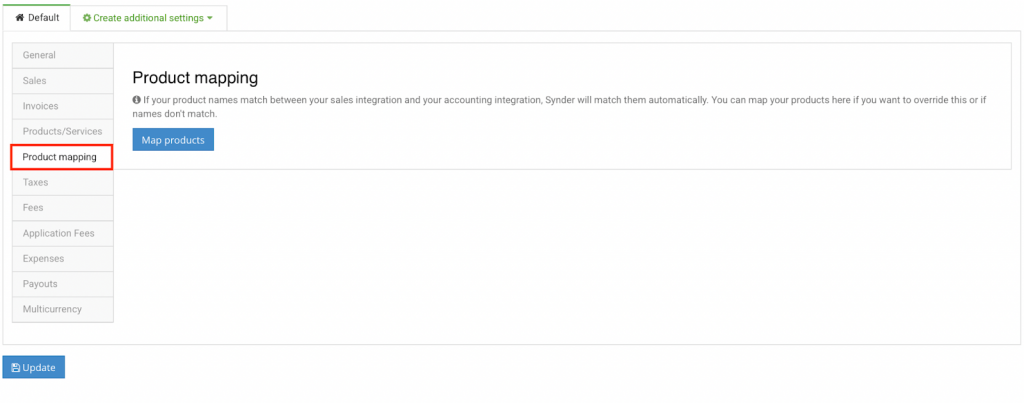
Synder is able to identify existing products in your accounting company and apply them to transactions. If product names in your payment system and accounting company don’t match 100%, fill in the product names from your payment platform in the right field to map them to product names from your Xero in the left field. Check out an additional guide about the Product mapping feature.
6. Taxes tab settings
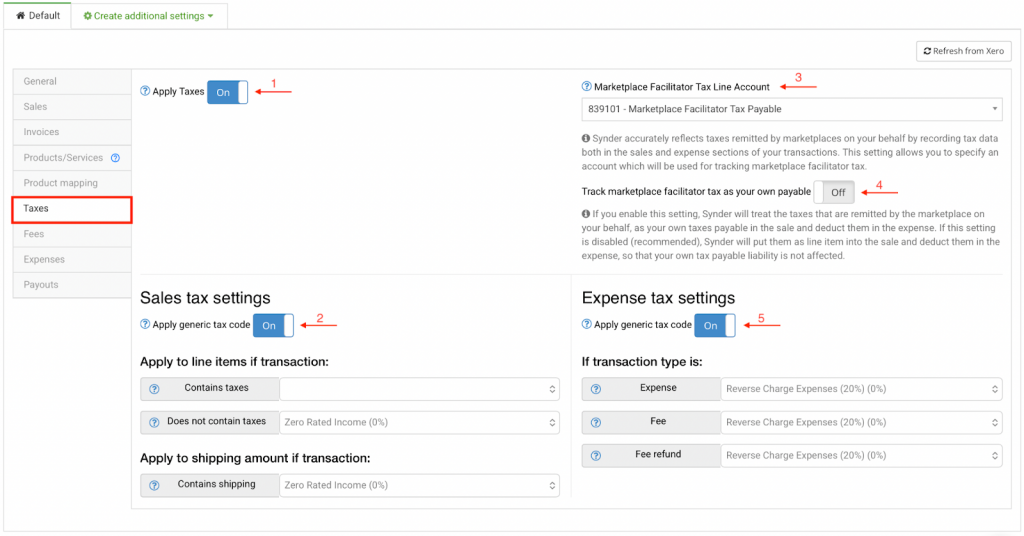
Synder transfers existing taxes into the appropriate Xero fields to ensure accurate tax reporting. If the payment processor (e.g., PayPal) does not apply tax, Synder does not transfer tax, and synced transactions do not include tax unless you enable features such as “Apply generic tax. Check out more about How sales tax works in Synder.
- Apply Taxes – When ON, Synder automatically finds the matching tax code in Xero and applies it to the transaction for accurate tax calculation and reporting. When disabled, Synder posts tax amounts as line items.
- Sales tax settings – Apply generic tax code – When ON, Synder applies the tax rate specified in the settings to all synced sales transactions. You can select different tax rates for taxed and non-taxed transactions
- Marketplace Facilitator Tax Category – Synder records marketplace-remitted taxes in both the sales and expense sections of your transactions for accurate reporting of your lack of tax liabilities. Use this setting to choose the account for tracking marketplace facilitator tax. See our guide for more details Marketplace Facilitator Tax.
- Track marketplace facilitator tax as your own payable – When ON, Synder records marketplace-remitted taxes as your tax payable in the sale and deducts them as an expense. When OFF, Synder records these taxes as a line item in the sale and deducts them as an expense without affecting your tax payable liability. See our guide for more details Marketplace Facilitator Tax.
- Expense tax settings – Apply generic tax code – When ON, Synder applies the specified tax rate to all synced expense transactions, ensuring consistent tax recording for every type of expense.
7. Fees

- Clearing account – Select the clearing account where PayPal fees are recorded. Use the same account as the Sales clearing account to keep all related transactions consistent.
- Fee supplier – Select a Xero supplier to associate with your PayPal fees, or enter a custom name such as “PayPal.”
- Fee Line Account – Select the expense category to apply PayPal fees to.
8. Expenses
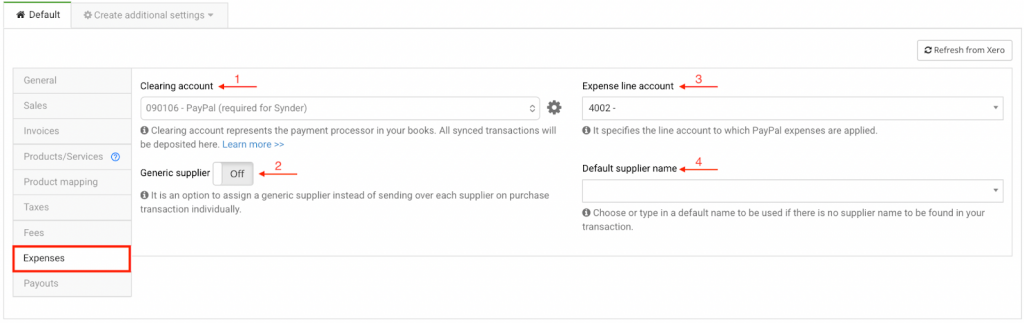
- Clearing Account – Select the clearing account where PayPal expenses are recorded. Use the same account as the Sales clearing account to maintain consistency.
- Generic Supplier – When ON, Synder assigns a default vendor name to all PayPal transactions, replacing the names from PayPal. Choose an existing vendor or enter a custom name in the Generic Vendor dropdown.
- Expense Line Account – Select the Xero category to apply PayPal expenses for accurate tracking and reporting.
- Default Supplier Name – Select or enter a default vendor name to use when a PayPal transaction does not include a supplier name.
9. Payouts
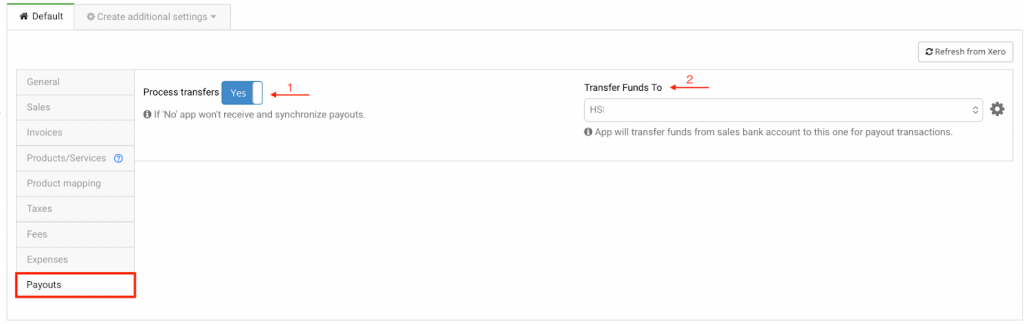
The Payouts tab tracks PayPal payouts—bulk transfers from your payment processor to your bank (daily, weekly, monthly, etc.). Synder records these as transfers from the clearing account to your checking account. Syncing payouts with sales and expenses helps reflect actual cash flow and simplifies reconciliation.
- Process payouts – When ON, Synder tracks PayPal payouts and creates transfers to your checking account. When OFF, payouts are not synced, and the clearing account won’t be cleared automatically.
- Transfer Funds To – Select the Xero checking account where the PayPal payouts are deposited by Synder.
Additional Settings
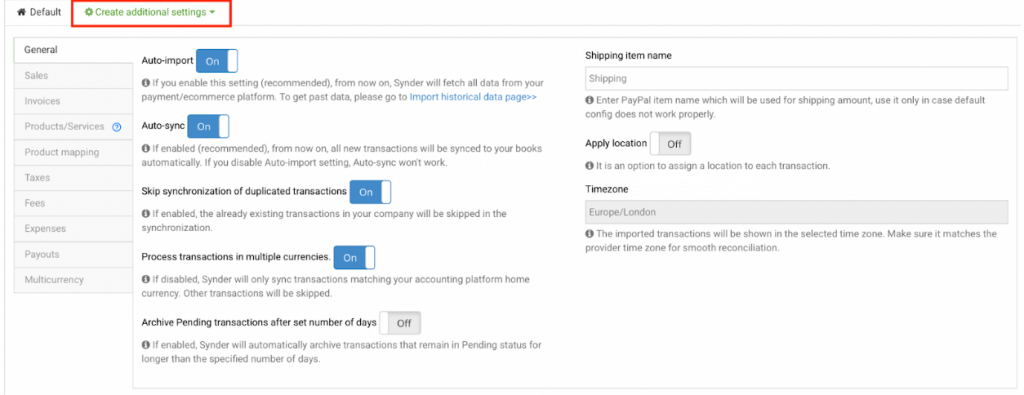
Use the “Create additional settings” option only if you want to categorize different types of transactions. Use this feature if you’re tracking some transaction types differently.
Reach out to Synder Team via online support chat or email with any questions you have – we are always happy to help you!
