

Cases it may cover: you want to notify customers on the due date, or thank them for their purchase.
How it works: you create a smart rule that sends the email automatically.
Supported platforms: QuickBooks Online and Xero. The steps differ, so follow the section for your platform.
Note: when your customers reply to an email sent by a Smart Rule, their reply goes directly to your company email address — not to Synder support.
Sending thank you emails in QuickBooks Online
- Go to your Synder company → click the Smart rules tab on the left-side menu → hit Create rule.
- Select Invoice as a trigger → choose Sent.
- Click Action → select the nearest block.
- Under the Create/Edit section, select Email → Customer → Current customer → enter the Email subject → your message → select Attach PDF QuickBooks Invoice if needed, then click Save and close.
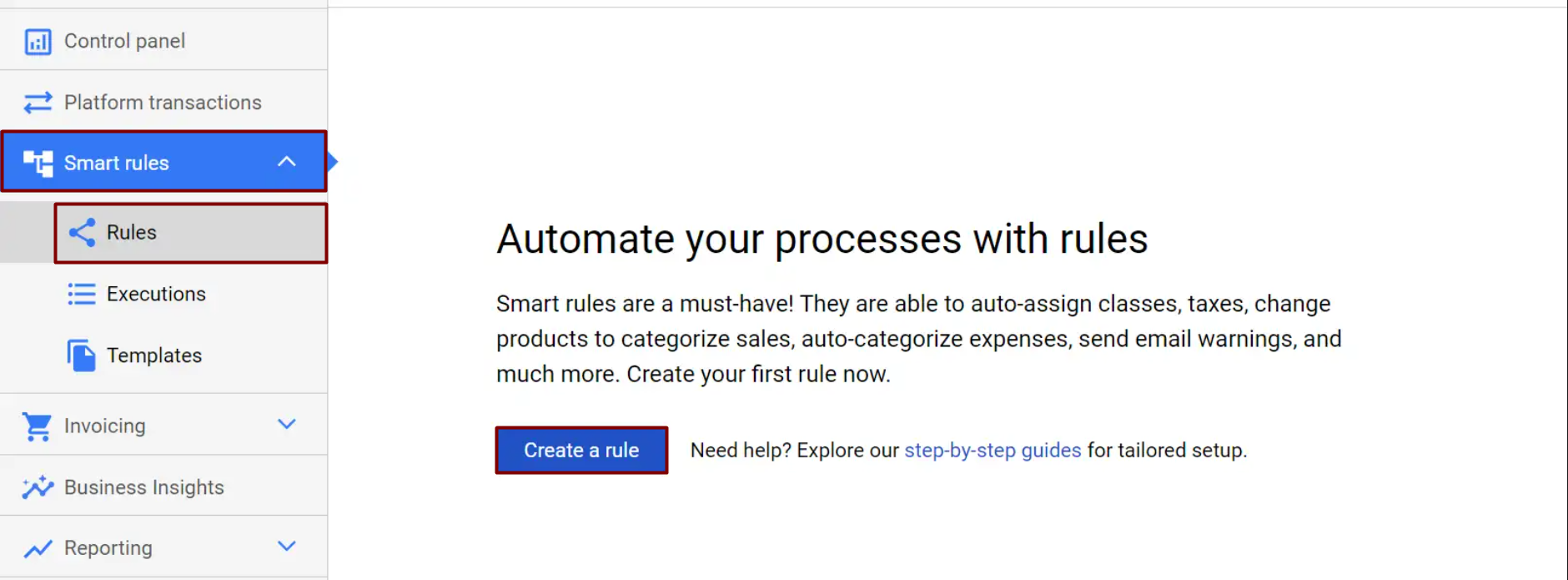
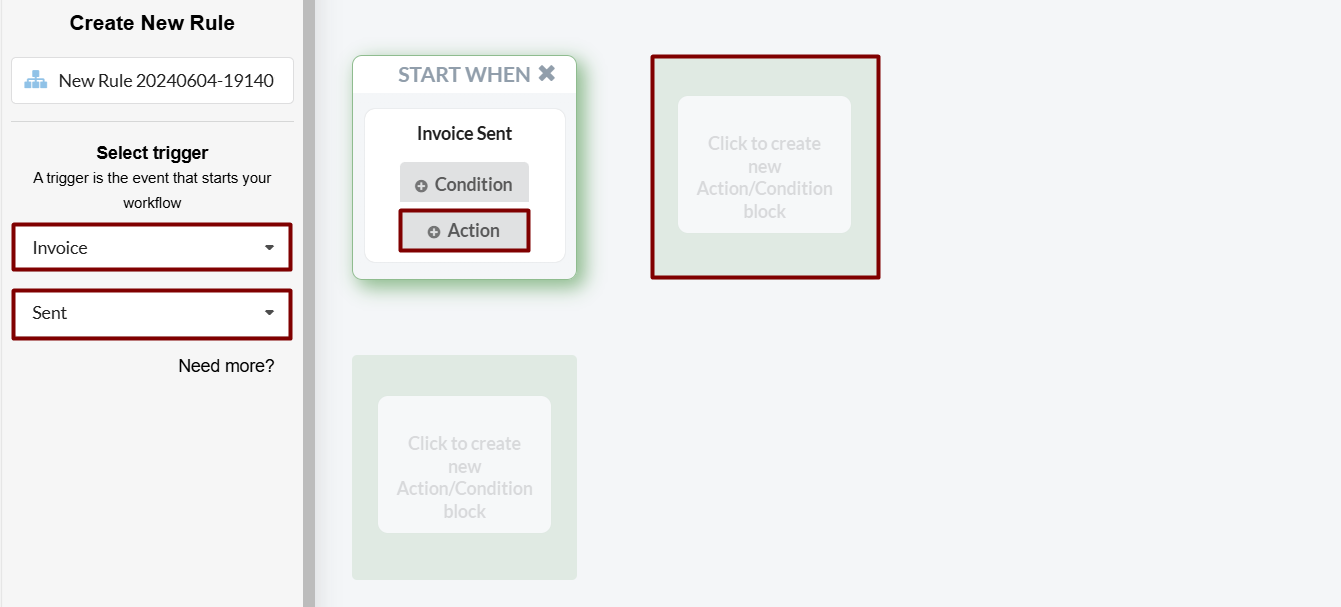
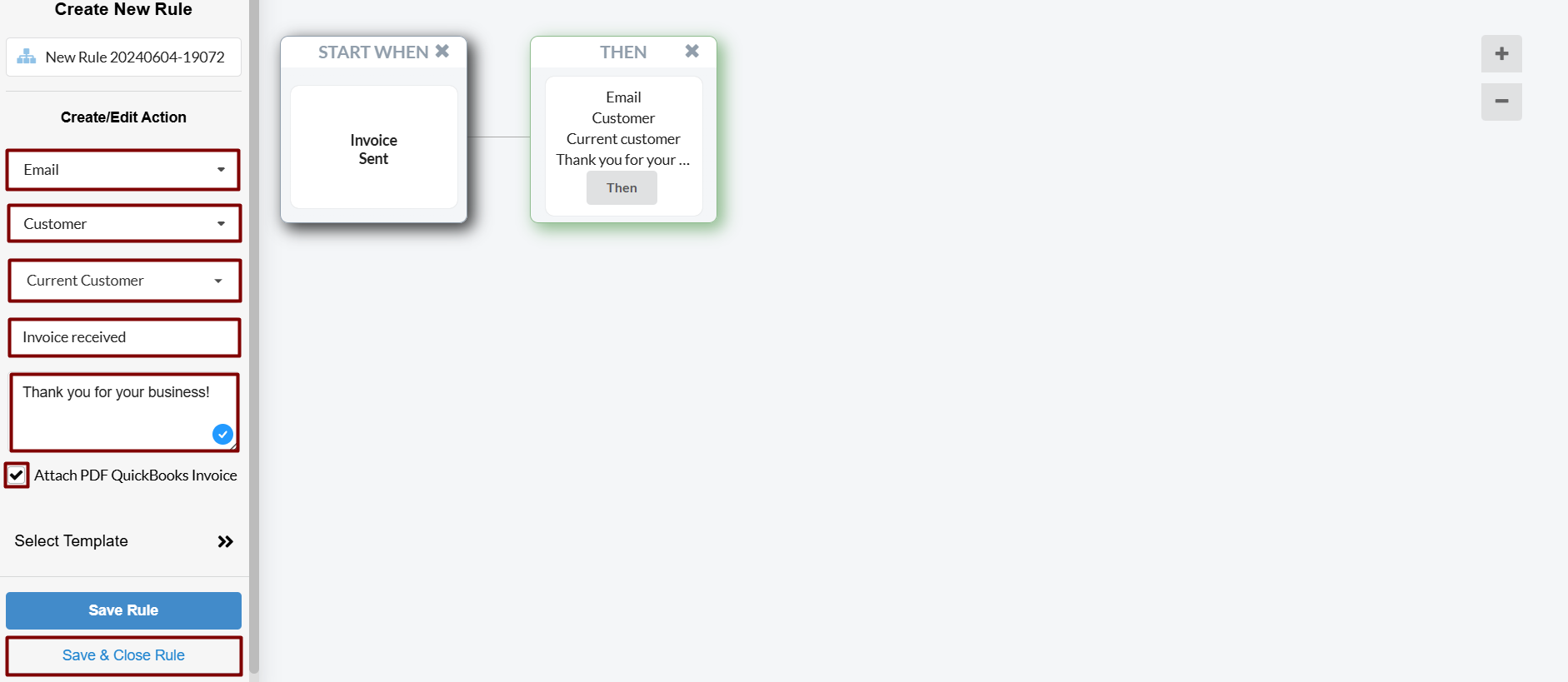
From now on, your clients are notified automatically once invoices are sent from Synder’s side.
Sending thank you emails in Xero
Xero supports email actions too, but three things work differently:
- Xero has no Invoice → Sent trigger. Invoices fire on Created only.
- The action is Email → Contact, then you pick the contact. QuickBooks uses Email → Customer → Current customer.
- There is no Attach PDF option for Xero.
Because of the first point, the two emails you can send are not the same. Pick the trigger that matches the message you want.
“Your invoice has been generated” — Invoice trigger
The rule: Invoice → Created · THEN Email → Contact.
This fires the moment Synder creates the invoice in Xero, so use it to tell the customer their invoice is ready. It cannot thank them for paying, because the invoice is not paid yet at that point.
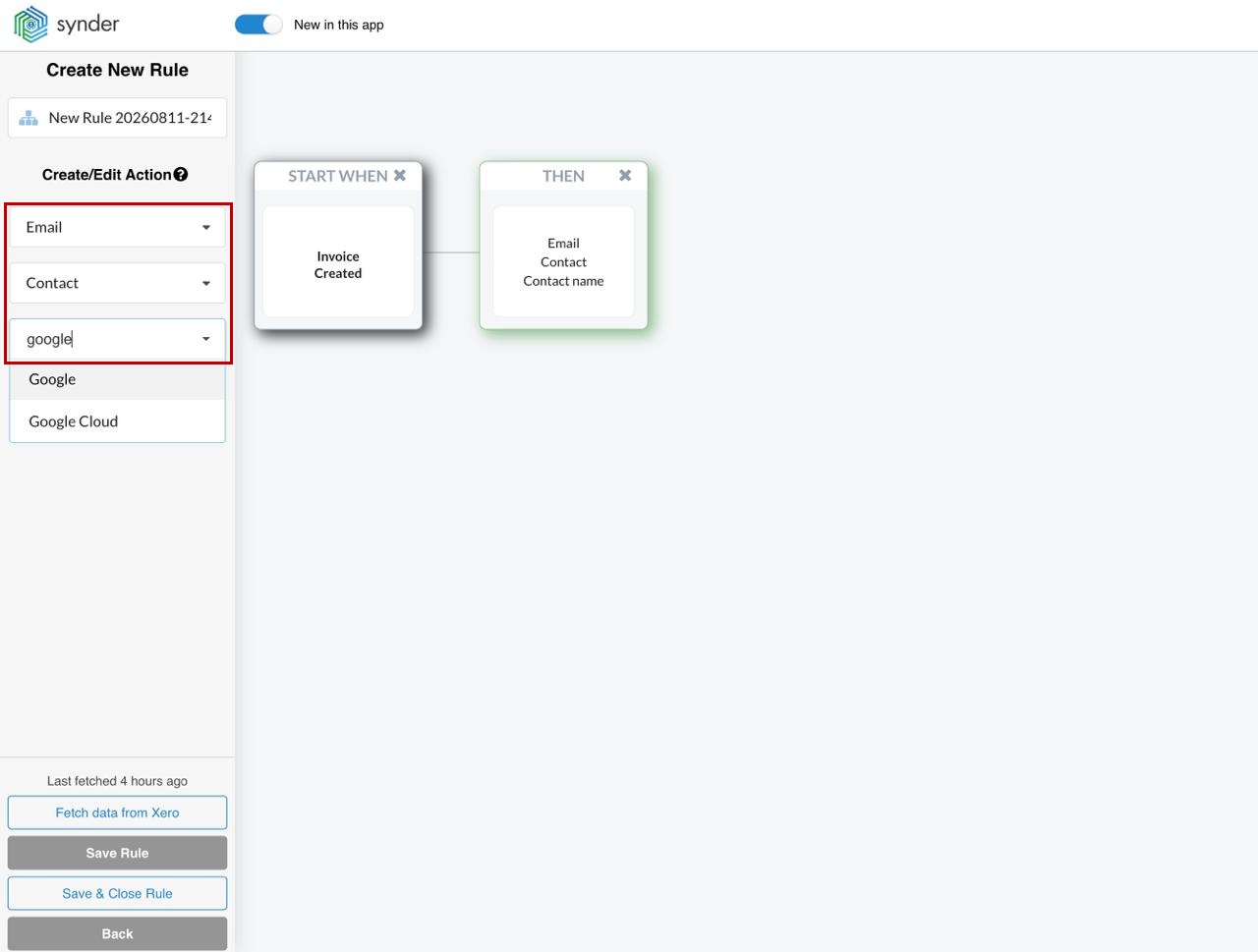
“Thank you for your payment” — Invoice Payment trigger
The rule: Invoice Payment → Created · THEN Email → Contact.
Invoice Payment is a separate entity in Xero, and it fires when the payment lands. Use this one for a genuine thank-you after the customer has paid.
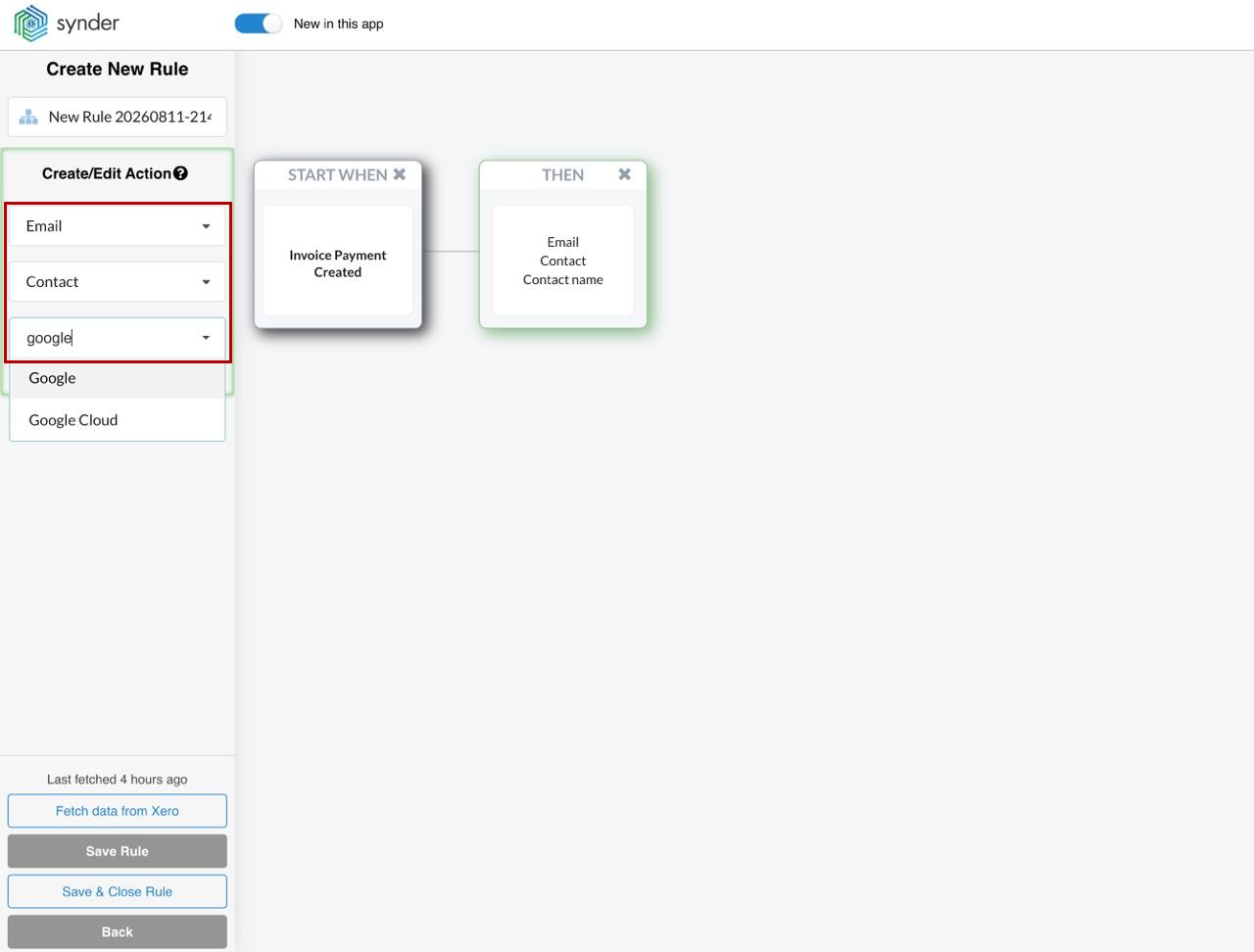
In both rules, click the message body to open the Message editor, where you can format the text and use the template helper to add transaction details. Then click Confirm and save the rule.
For everything else Xero-specific — the full entity list, the three action types and the fields you cannot update — see Smart Rules for Xero: Entities, Actions and Limitations.
Reach out to the Synder team via online support chat, phone, or email with any questions you have – we’re always happy to help you!
Learn ‘Why do I have pending transactions in a Daily Summary?’ with Synder.
