

Overview:
• Per-Transaction sync — each transaction carries its own tax. Synder matches tax by rate/percentage, so fixes usually mean setting up the correct tax rates and codes in your accounting system, then resyncing. The steps below apply directly.
• Summary Sync (Daily Summary) — Synder posts one aggregated journal entry, and tax is handled through mapping, not per-transaction rates. If you are on Summary Sync, configure taxes with Track Sales Taxes in QuickBooks (Summary Sync) before troubleshooting here.
Not sure which mode you use? Check Synder → Settings → Integration — the sync type is shown per connection.
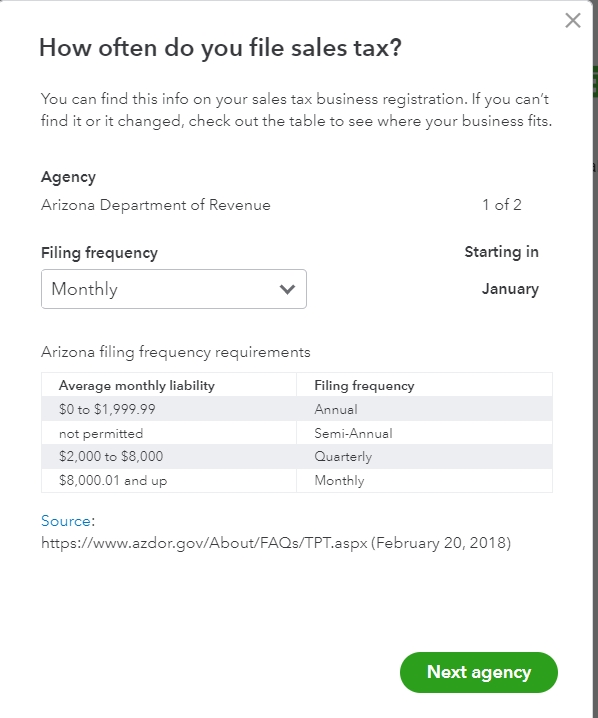
US companies
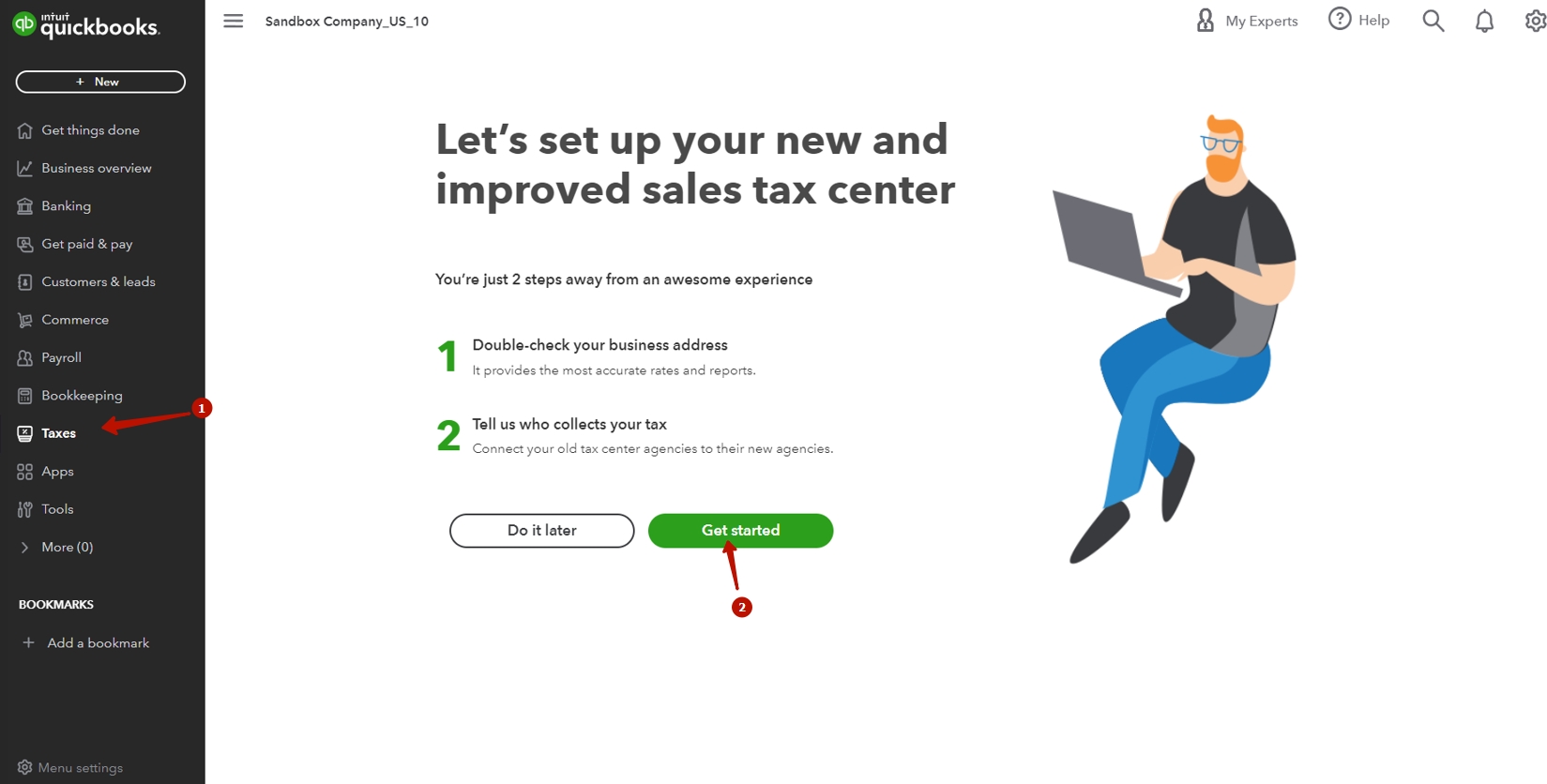
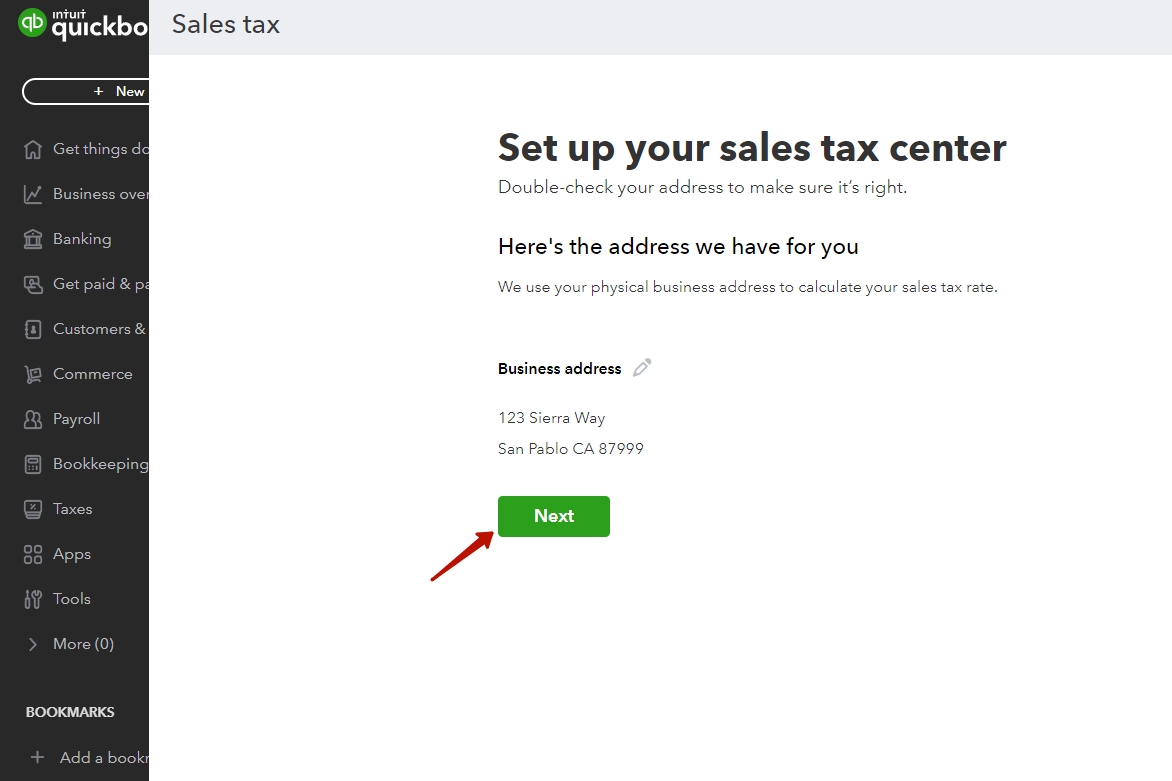
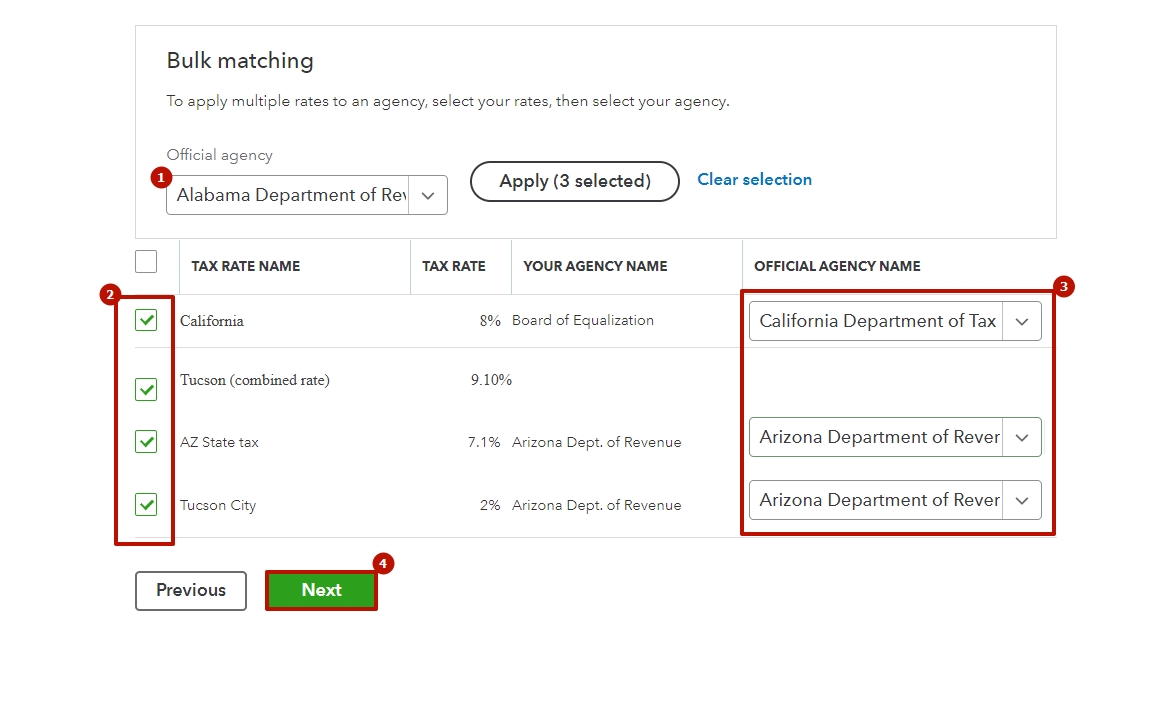
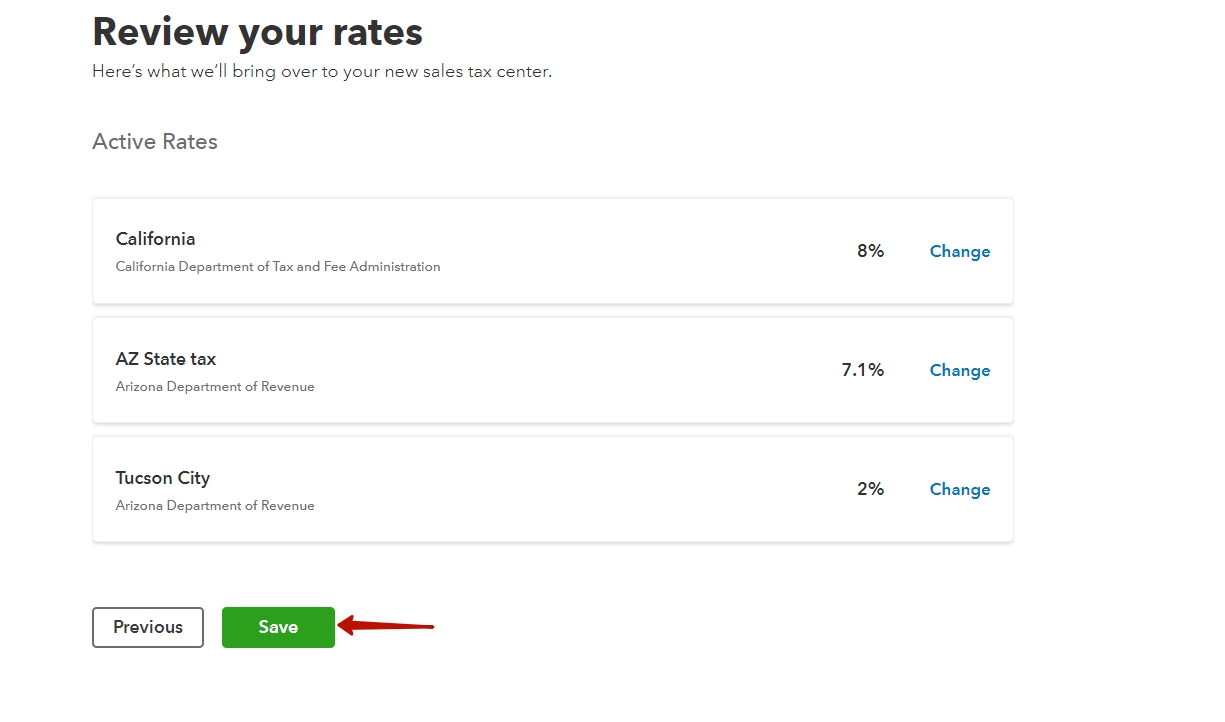
Reason: The Sales Tax center is not setup.
Solution: Log in to QuickBooks Online→ go to the Taxes tab → set up your Tax agency and select the needed tax rates and the filing frequency. Then resync failed transactions.
Non-US companies
First, check what’s actually in the rate
Synder syncs taxes exactly as your sales platform sends them — it does not calculate tax. If a transaction’s tax rate looks unfamiliar (for example, 16% instead of your usual 13%), your platform is likely combining two rates into one before sending it to Synder.
A common cause is a fee that was set up as a tax rate in your payment platform. If a 3% processing or handling fee is configured as a tax in Stripe, Stripe adds it on top of your real sales tax (13% + 3% = 16%) and sends the combined 16% to Synder. If QuickBooks has no 16% tax code, the transaction fails with “Tax Code not found in your accounting company.”
What to do:
- If the combined amount is fine as tax — create the matching tax code in QuickBooks Online and resync (see Reason 1 below).
- If the fee should not be tax — the cleanest fix is upstream: correct it in your payment platform so the fee is a fee, not a tax rate. To change how the amount is recorded in QuickBooks instead, see Global Taxes in Synder → “Removing, Excluding, or Reclassifying Incoming Tax.”
Reason 1: There is no tax code of the given rate in your accounting company.
Solution: Discuss with your accountant whether you want to have this tax code created in your accounting company.
This is the message you will receive in the logs when a transaction fails.

If yes, create it in your books and resync the transaction.
If no, synchronize your transaction with a default tax code (it will keep the original tax amount, but will change the tax name to the one you select in settings):
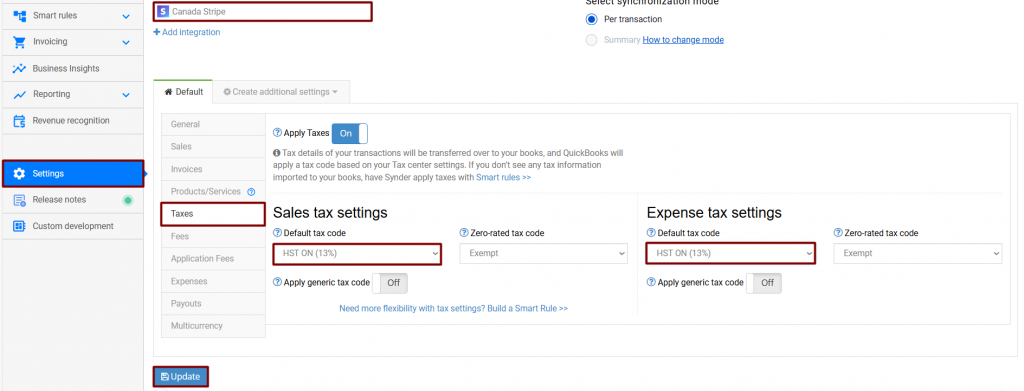
- Go to the Settings on the left-side menu → select the needed platform in the Integrations dropdown. → go to the Taxes tab;
- Select Default tax code, now it will be used any time when the rate needed is missing for further synchronized transactions;
- Click Update on the bottom of the page to save your settings;
- Synchronize the failed transaction again.
Reason 2: Synder calculates taxes and applies them to your accounting company checking the existing rates in it, but sometimes there may be limitations (e.g., whether an Inclusive or Exclusive tax should be applied). In this case, there may be 10.39% tax applied, for example, but the closest rate in your accounting company is 10%.
Solution a: if you are ok to see such a tax code in your accounting company, create it in QuickBooks Online and resync the transaction.
Note: We recommend you check it with your accountant first.
Solution b: synchronize your transaction with a default tax code (it will keep the original tax amount, but will change the tax name to the one you select in settings):
- Go to the Settings on the left-side menu → select the needed platform in the Integrations dropdown → go to the Taxes tab;
- Select Default tax code, now it will be used any time when the rate needed is missing for further synchronized transactions;
- Click Update on the bottom of the page to save your settings;
- Synchronize the failed transaction again.
Solution c: contact our Support team so that we can advise you further.
Synder has several tax settings that can be adjusted according to your flow. Follow this link to learn more.
Reach out to the Synder Team via online support chat, phone, or email with any questions you have – we’re always happy to help you!
