

If you need to undo the syncs, you can easily and quickly roll back any transaction. Rollback will completely take the transaction away from your QuickBooks/Xero, not causing any damage to your accounting data. This is also the fastest way to clean up an incorrect sync — for example, if your first sync posted transactions to the wrong accounts, created duplicate or overdue invoices, or synced to the wrong entity. Instead of manually deleting each transaction in QuickBooks or Xero, you can roll them back in bulk and start fresh.
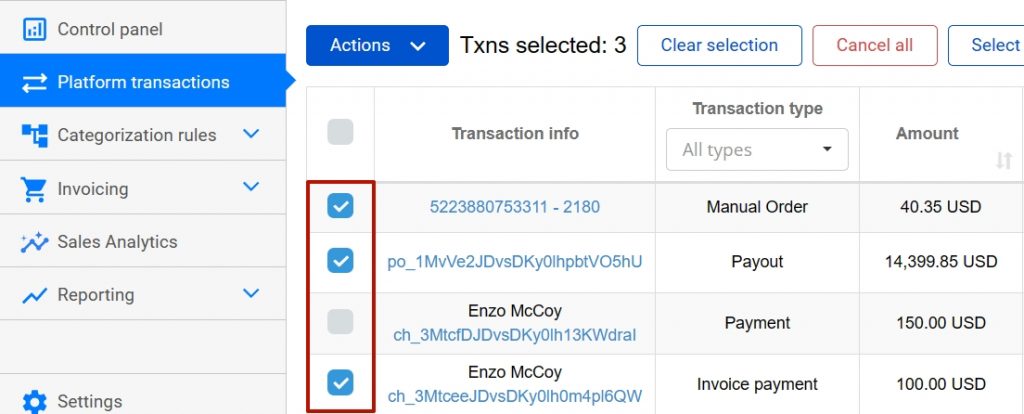
1a. To roll back several transactions in the Platform transactions tab, select the transactions needed as pictured.
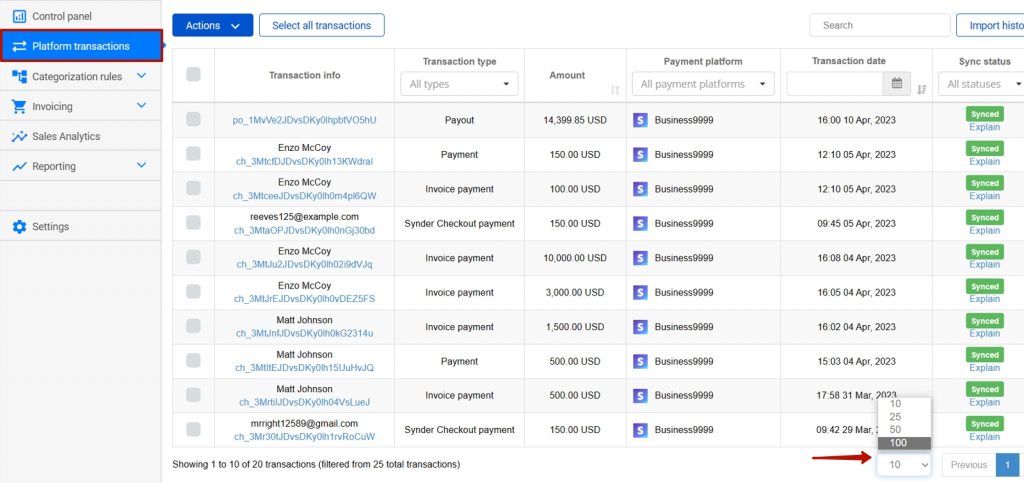
You can also show up to 100 transactions per page, if needed
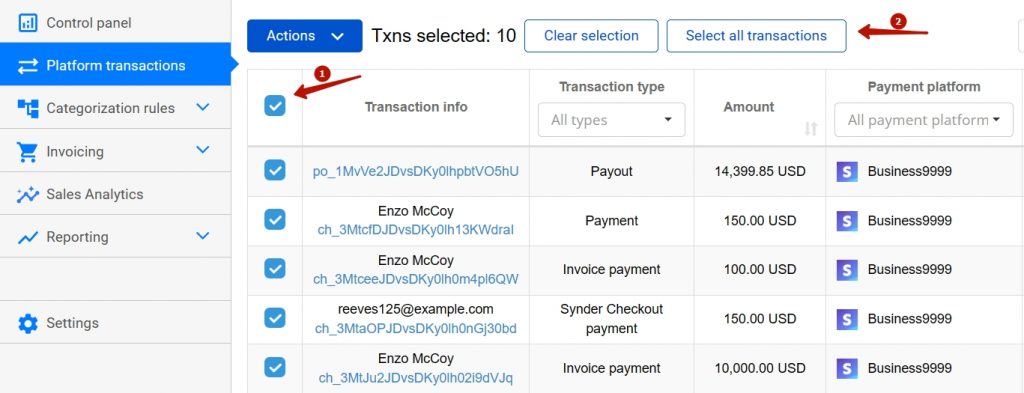
1b. Alternatively, if you want to roll back all, click square selector on the Transaction Info (1) and roll back transactions on the page, or use the option to roll back all transactions on all pages (2), which will be available after all transactions per page are selected.
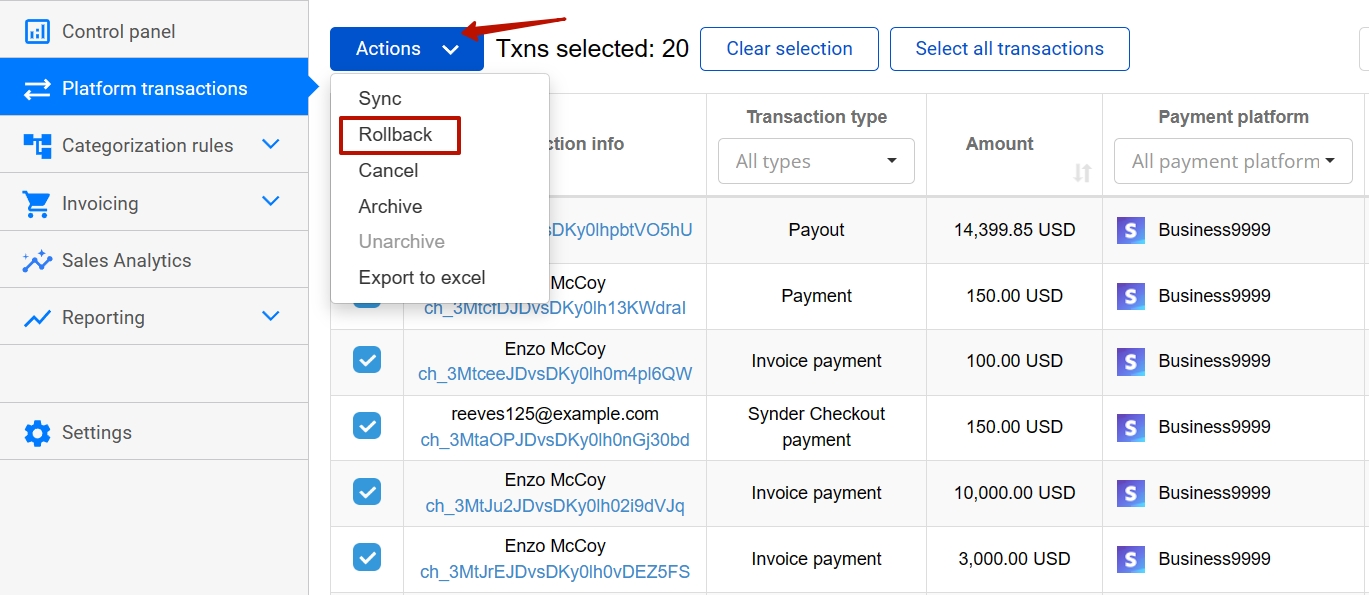
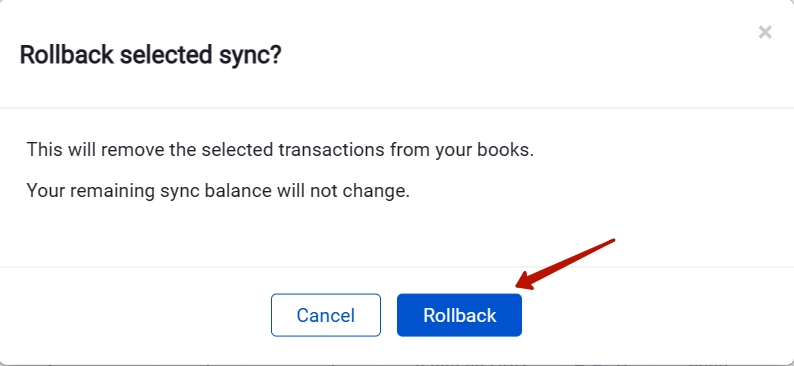
2. After you selected the transactions needed, just click on Actions menu, click Rollback and confirm it.
Using Rollback to Clean Up an Incorrect Sync
If a setup or first sync brought data into your accounting software incorrectly, you do not need to delete transactions by hand. Select the affected transactions in the Platform transactions tab (use the steps above to select several, a full page, or all pages) and roll them back — Synder removes them from QuickBooks or Xero for you. Once your books are clean, fix the setting that caused the issue, then re-sync.
When Rollback Can’t Remove Everything
A rollback can be blocked in a few situations. If one of these applies, resolve it first and then run the rollback again:
- Roll back before you disconnect. If you plan to remove an integration or delete transaction history in Synder, roll back the transactions first. Once an integration is disconnected or its records are removed, Synder can no longer roll those transactions back out of your accounting software — you would then have to delete them manually in QuickBooks or Xero.
- Matched transactions. Any transaction that is matched to another entity (for example, a payment matched to an invoice) cannot be rolled back until it is unmatched.
- Closed accounting period. If a transaction falls inside a period that has already been closed in QuickBooks or Xero, the accounting platform will not allow changes through Synder. Reopen the period (or ask your accountant to), then roll back.
- On Summary Sync with Xero, a few record types must be removed manually before the rollback can finish. See How to Roll Back Summary Sync Transactions in Xero for the exact steps.
Cleaning Up Leftover Synder-Created Accounts
After a rollback, some accounts that Synder created during setup (for example, platform payout, clearing, or fees accounts) may still appear in your chart of accounts. Once the rolled-back transactions are gone and the account balance is $0, you can make the account inactive in QuickBooks or Xero.
Important: only remove accounts that Synder created. Do not apply these steps to accounts that represent your real bank or credit-card accounts, even if they share a similar name — deleting those would remove your actual financial records.
Please note: rollback does not reinstate the number of syncs available.
Reach out to the Synder Team via online support chat, phone, or email with any questions you have – we’re always happy to help you!

If a new product was created in Quickbooks as a result of the transaction, will that new product be deleted if the transaction is rolled back?
Hello Ryan! Yes, if you roll back a transaction that has created a new product, the new product will also be deleted.