

If your business takes a Square Capital loan, Synder handles the repayment flow automatically. When Square deducts a capital repayment, Synder syncs it as an expense. If Square reverses a repayment and returns funds to you, Synder syncs it as a deposit.
Synder creates the following transaction types from Square Capital activity:
- Square Capital Payment — a repayment deducted from your account → synced as an expense
- Square Capital Reversed Payment — a repayment returned to you → synced as a deposit
To make sure these transactions land in the right accounts in your books, follow the steps below.
Step 1: Set up the Lending liability account in Fees settings
Synder has a dedicated Lending liability field in your Square integration settings. Set it once, and Synder will automatically route all Square Capital transactions to that account.
- Go to Synder → Settings → select your Square integration.
- In the left menu, click the Fees tab.
- Find the Lending liability field.
- Select the account where Synder should post lending transactions — typically a Loan Payable or Other Current Liability account.
- Click Update.
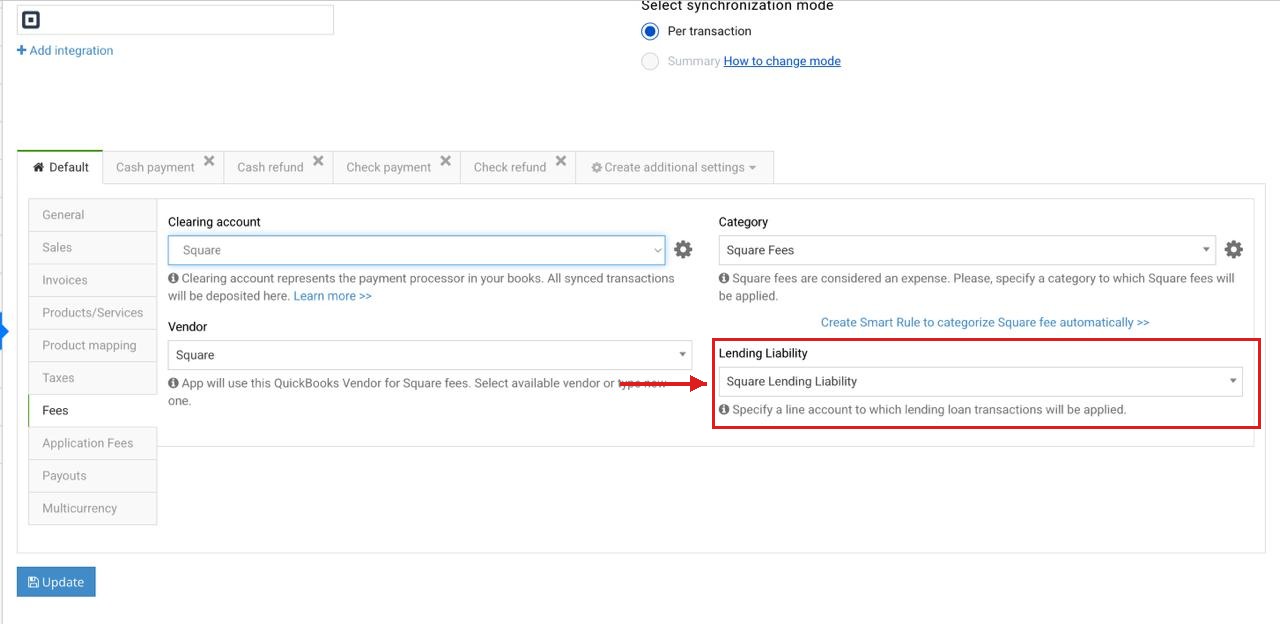
Step 2: Record the initial loan in your books manually
When Square deposits the loan into your account, Synder does not create a separate transaction for it. You need to manually record the initial loan amount in your accounting platform. Use the same account you set up in Step 1. That way, as Synder syncs each repayment, your outstanding loan balance decreases automatically — making it easy to track how much you have left to pay off.
Step 3: Sync Square Capital Payment transactions
Once your settings are in place, sync your Square Capital transactions:
- Go to Platform transactions and look for the Square Capital Payment or Square Capital Reversed Payment transaction types.
Note: If you don’t see them, use the manual import option in the top-right corner of the Platform Transactions tab. - Select the transactions and sync them to the books: Actions → Sync.
- Check that the created expenses and deposits are correctly categorized in the books.
Summary Sync users
On Summary Sync, Square Capital repayments for the day appear as a separate Loans group in your daily summary mapping table. Map the Loans group to the appropriate liability account — the same account where you recorded your initial loan advance. This keeps your outstanding balance accurate as Synder syncs each repayment.
That’s it! Now you know how to handle Square Capital payments in Synder.
Reach out to the Synder Team via online support chat, phone, or email with any questions you have – we’re always happy to help you!
