

- Who This Guide Is For
- How Synder Handles Taxes
- Per-Transaction Mode
- Summary Sync
- Handling Multiple Tax Rates From Different Regions
- When Your Payment Platform Sends No Tax Data
- Removing, Excluding, or Reclassifying Incoming Tax
Who This Guide Is For
This guide is for businesses that use QuickBooks Online with Synder and need to record taxes correctly across their accounting.
Use this guide if you:
- Use QuickBooks Online (US, Canada, UK, Australia, New Zealand, or any other region)
- Sell internationally or across multiple tax jurisdictions
- Have noticed that tax is not appearing — or is appearing incorrectly — in QuickBooks after syncing
How Synder Handles Taxes
Synder does not calculate taxes. It reads the tax information your payment platform sends, and then records it in your accounting software. If your platform doesn’t carry tax on a transaction, Synder has nothing to pass through.
Because Synder records tax exactly as your platform reports it, the rate that reaches QuickBooks always mirrors what your platform sends. If a tax rate ever looks different from what you expect, it’s worth reviewing your tax settings in the platform itself first, since that’s where the rate is defined. See Removing, Excluding, or Reclassifying Incoming Tax below if you need to adjust how incoming tax is recorded.
However, if your payment platform sends no tax data — for example, Stripe without Stripe Tax — there are custom solutions Synder can implement to handle this. These are covered in the sections below.
Per-Transaction Mode
The Use tax codes Setting
The core tax setting in Per-Transaction mode is Use tax codes, found under Settings → [Your Integration] → Taxes.
This toggle controls how tax amounts are recorded in QuickBooks:
- Use tax codes ON — Tax posts to the dedicated tax field in the transaction. QuickBooks recognises it as tax and includes it in tax reporting.
- Use tax codes OFF — Tax posts as a plain line item on the transaction. The amount is still recorded, but it will not appear in tax reports.
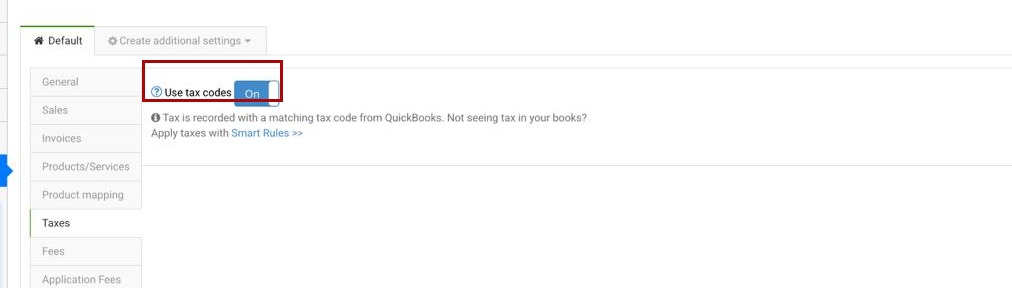
Note: Synder automatically detects whether the transaction is Tax Inclusive or Tax Exclusive based on the original transaction data — this is not something you configure in Synder settings, but can be adjusted with Smart Rules.
QuickBooks Online US: What You Will See
If your QuickBooks Online company is set up for the United States, the Taxes page in Synder will show only the Use tax codes toggle. No additional tax settings appear.
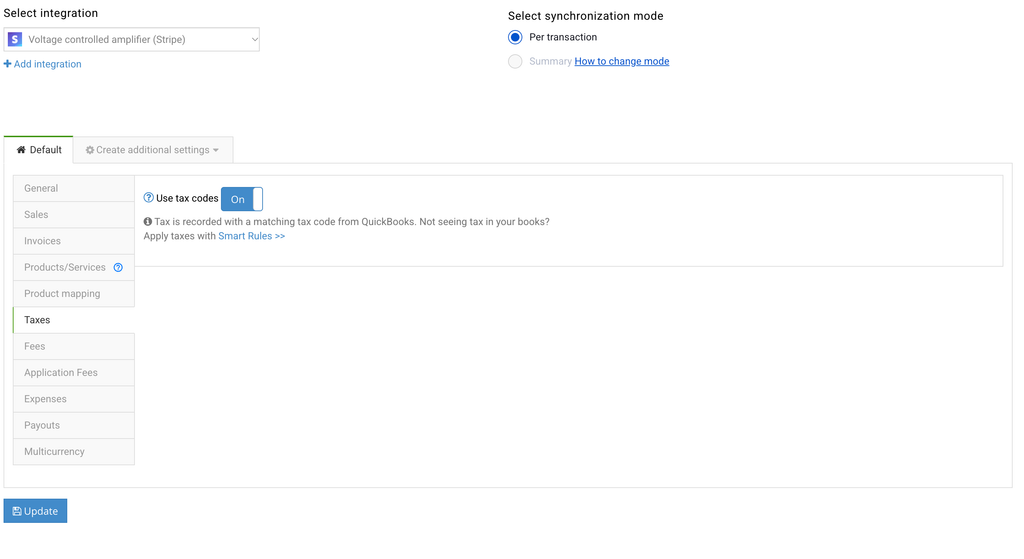
This is by design: QuickBooks Online (US) uses its built-in Automated Sales Tax (AST) engine, which calculates the correct tax rate based on customer location, shipping address, and item taxability. Synder’s job is simply to mark line items as taxable or non-taxable — QuickBooks Online does the rest. You do not need to configure tax codes or rates in Synder.
QuickBooks Online Non-US: Additional Settings
If your QuickBooks company is outside the US (Canada, UK, Australia, New Zealand, EU, etc.), enabling Use tax codes reveals additional settings:
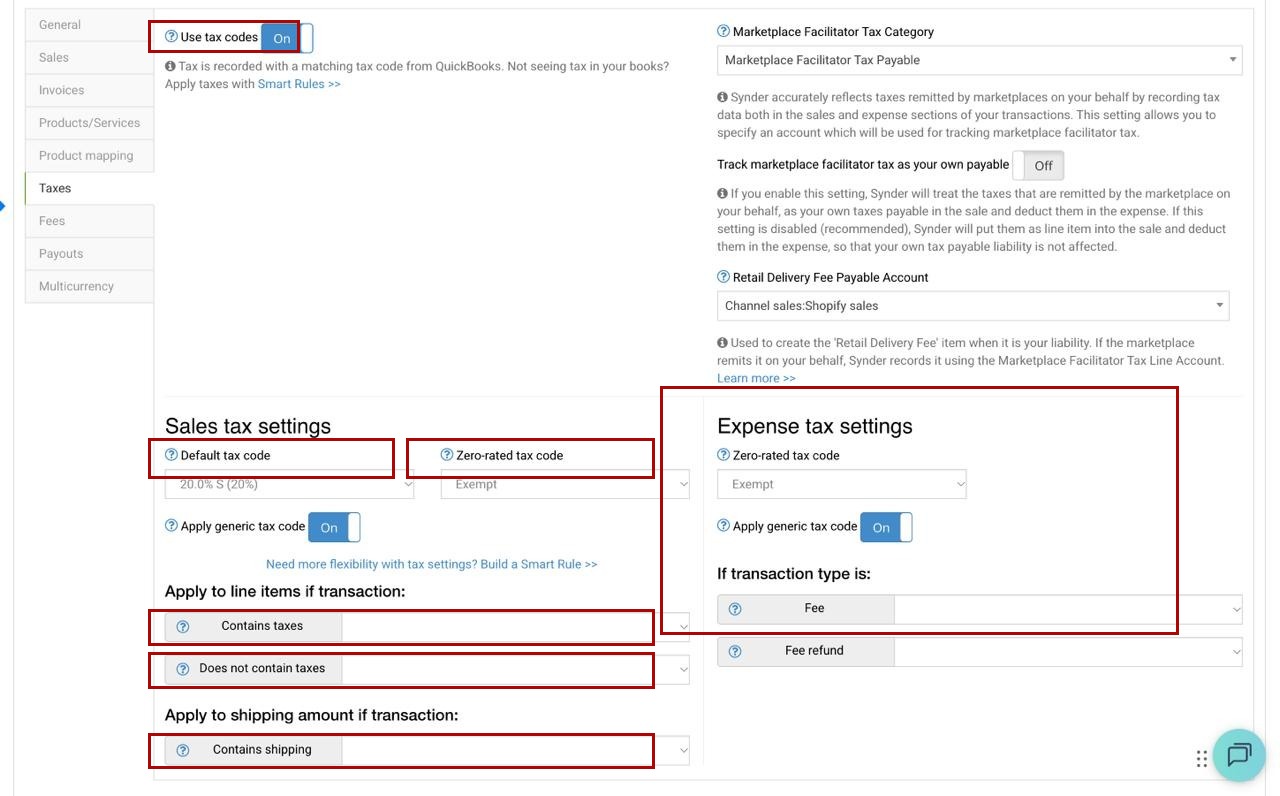
Default Tax Code
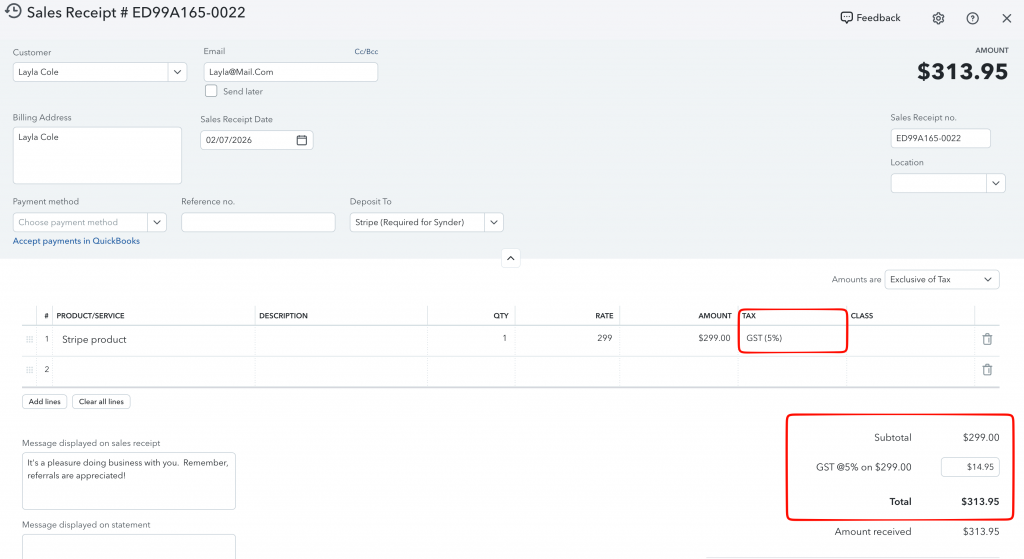
Acts as a fallback when Synder cannot find a matching tax rate in your QuickBooks. For example, if your payment platform sends 8.25% tax but no 8.25% code exists in QuickBooks Online, the transaction would normally fail. With a Default Tax Code set, Synder applies this fallback code and the transaction syncs successfully.
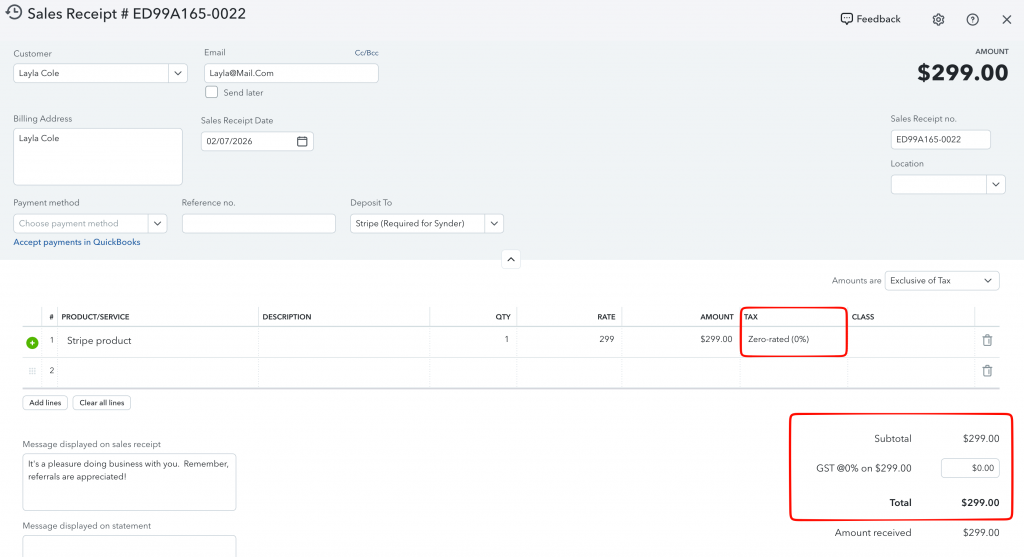
In the example below, Default tax setting of Synder was set to GST 5%
Zero-Rated Tax Code
Applied automatically when the tax amount on a transaction equals $0. This lets Synder record the transaction with the correct tax classification (e.g. Exempt or Zero-Rated) rather than leaving the tax field blank.
Generic Tax Code
Lets you apply a specific tax code based on conditions rather than relying on matching the rate from your payment platform. There are three uses:
- Apply if a transaction contains taxes — Synder ignores the tax rate from your payment platform and applies your chosen code instead. Useful when your platform’s tax calculation is incorrect or you want to standardise to a single code.
- Apply if a transaction does NOT contain taxes — Synder applies a tax code only to transactions that arrive with no tax. This is the key setting when your payment platform sends no tax data at all (see the section below).
- Apply to shipping amount if the transaction contains shipping — Applies a specific tax code to the shipping line when shipping is present on the transaction.
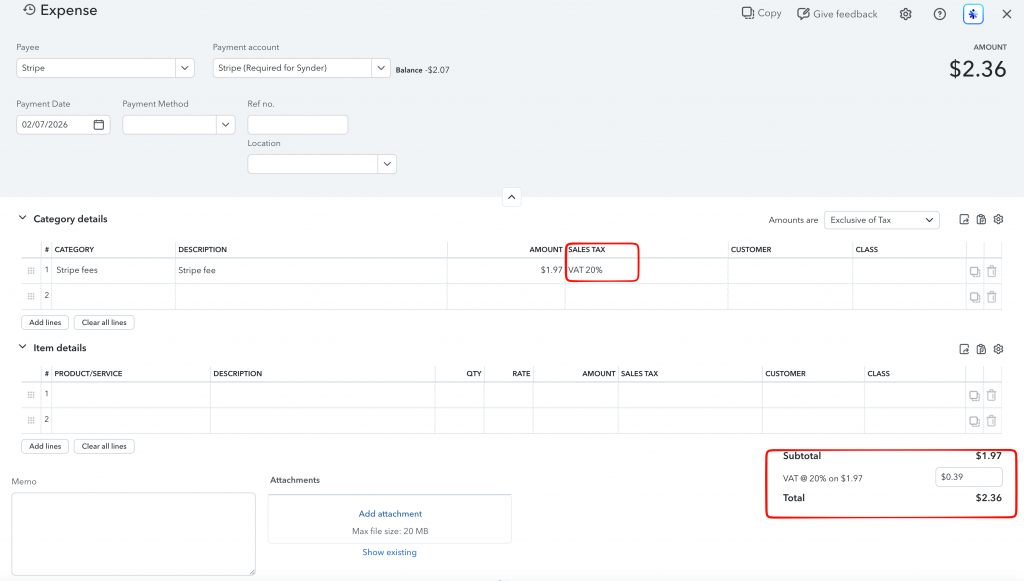
Taxes on Expenses
Some jurisdictions require businesses to account for tax on payment processor fees. This setting lets you apply a tax code to fees recorded as expenses in QuickBooks. The Default, Zero-Rated, and Generic Tax Code options are all available here.
Summary Sync
QuickBooks Online US: Setting Up Tax Mapping
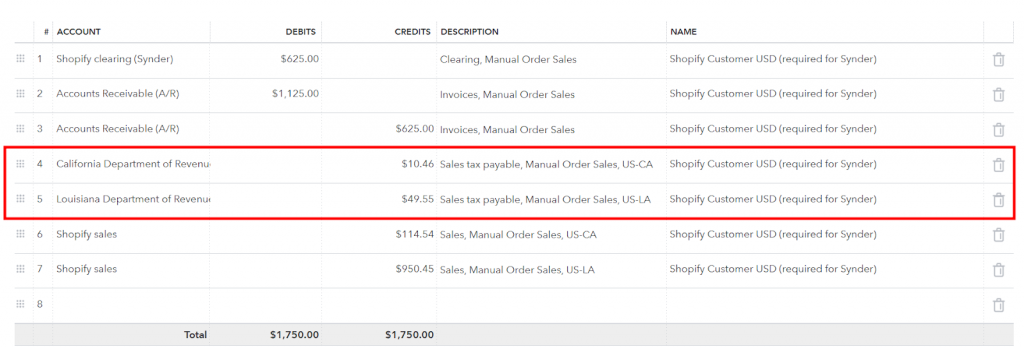
QuickBooks Online (US) does not allow tax codes in journal entries. Synder posts tax amounts directly to the liability accounts you specify in your mappings.
Once you have transactions with tax syncing through, a Taxes Payable line will appear in your Mapping → Mappings list. Map this line to the appropriate Sales Tax Payable liability account in QuickBooks.
Important: Do not map to system-generated tax liability accounts (e.g. accounts created by QuickBooks Online’s own tax centre). Use a plain Sales Tax Payable liability account instead — mapping to system accounts will cause sync failures.
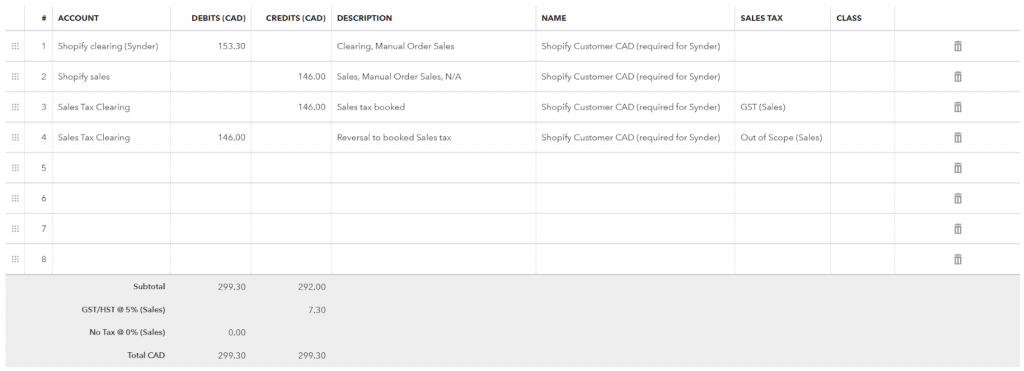
Example of how your summary will look:
Changes only apply to newly generated summaries. After updating your mapping, rebuild existing summaries. See How to Rebuild Summaries.
QuickBooks Online Non-US: Setting Up TaxMapping
For non-US QuickBooks companies, tax codes can be applied to journal entries. To set this up:
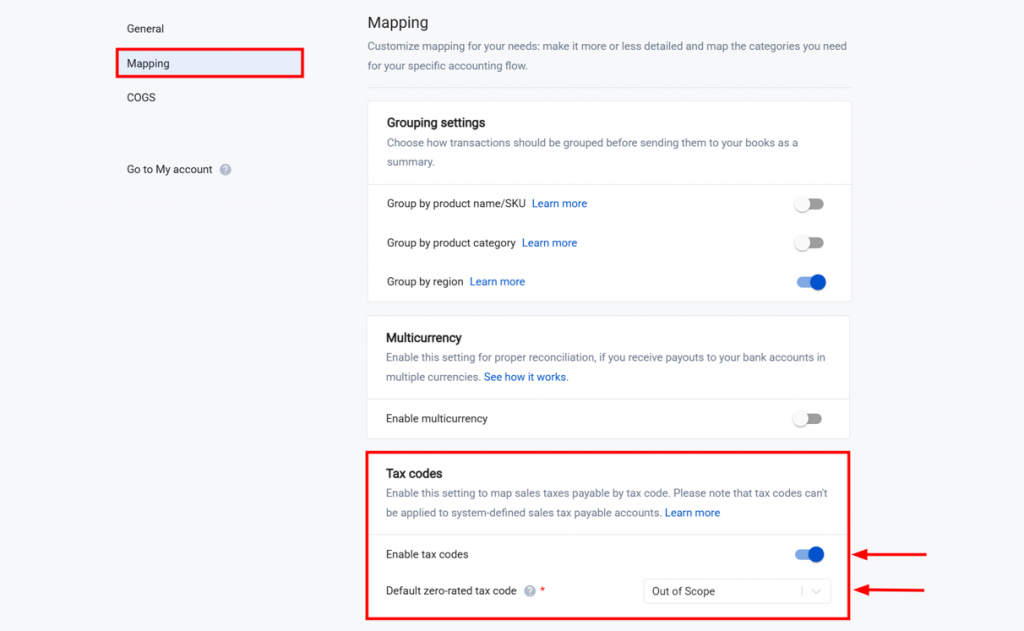
- Go to Settings → Mapping and scroll down to Tax codes.
- Enable tax codes and assign a default zero-rated tax code — this is required for all non-tax lines (shipping, discounts, fees, etc.)
- Open Mapping → Mappings list. You will now see an extra field on your summary lines where you can select a tax code for them.
- Assign the zero-rated tax code to all other (non-tax) mapping lines, or rely on the default zero-rated code set in Settings.
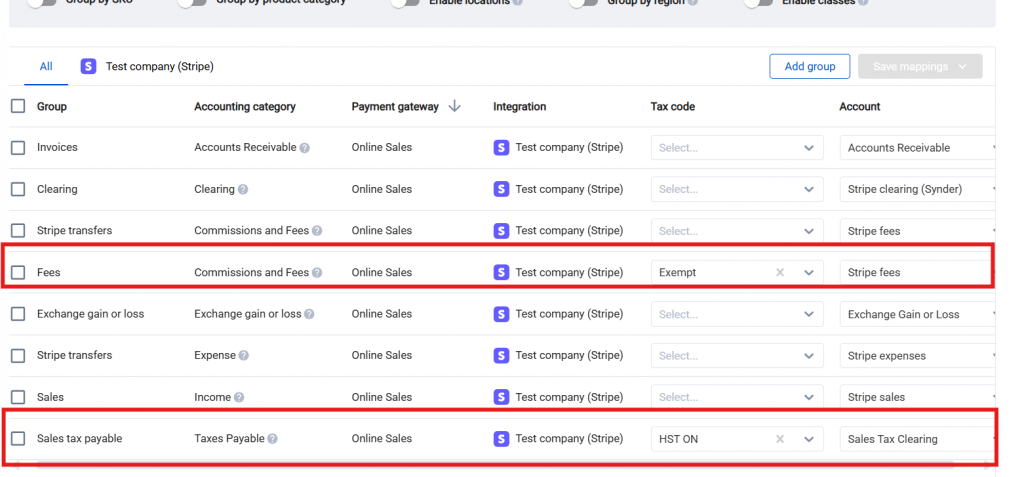
- Assign a dedicated tax code to your tax payable lines.
- Save and rebuild existing summaries.
Once set up, for each tax amount in your transactions Synder creates:
- A taxable sales amount line with the mapped tax code applied
- An offsetting zero-rated line to balance the entry
This ensures taxable revenue is reported correctly and tax appears in QuickBooks Online’s tax reports without overstating income.
Key Limitations
- Tax codes must exist first. Synder pulls tax codes directly from QuickBooks. If the code you need doesn’t exist there, create it in QuickBooks Online before trying to use it in Synder.
- Matching is by percentage only (Per Transaction). Synder matches tax codes by rate — not by name or jurisdiction. If two codes share the same rate, Synder applies the one that sorts first alphabetically. Use Smart Rules to override this if needed.
- Do not use system-generated tax accounts for the Taxes Payable mapping. Accounts like “GST/HST Payable” are created by QuickBooks Online’s own tax centre and do not accept tax codes from journal entries. Use a plain liability account instead.
- Synder cannot increase the transaction total (Per Transaction). When tax is applied, it is extracted from the existing amount, not added on top. A transaction of $100 with 20% tax becomes $80 net + $20 tax = $100 total. The income portion decreases; the total stays the same.
- Tax codes on expenses are not supported in Summary Sync. To account for tax on fees, either do it manually or switch to Per-Transaction mode for that integration. See How Synder Handles Taxes on Fees.
- If you collect Taxes outside of the US while using QuickBooks Online US, all the collected taxes outside of the country will fall into an Out of Scope tax liability account.
Please Note: If a limitation you are facing is not included here, please reach out to our support team to discuss options for Custom Development that are available for any custom solutions starting from the Pro plan.
Handling Multiple Tax Rates From Different Regions
If you sell to customers in different states, countries, or regions with different tax rates, you need a way to route each transaction to the correct tax code and account.
Summary Sync: Group by Region
Group by Region automatically splits your summary entries by the customer’s country or region, giving you a separate Taxes Payable mapping line for each, so you can assign the correct tax code and liability account to each region independently.
Note: Enabling Group by Region splits all mapping lines by region — not just taxes. Sales, refunds, and shipping income lines will also be split.
To set it up:
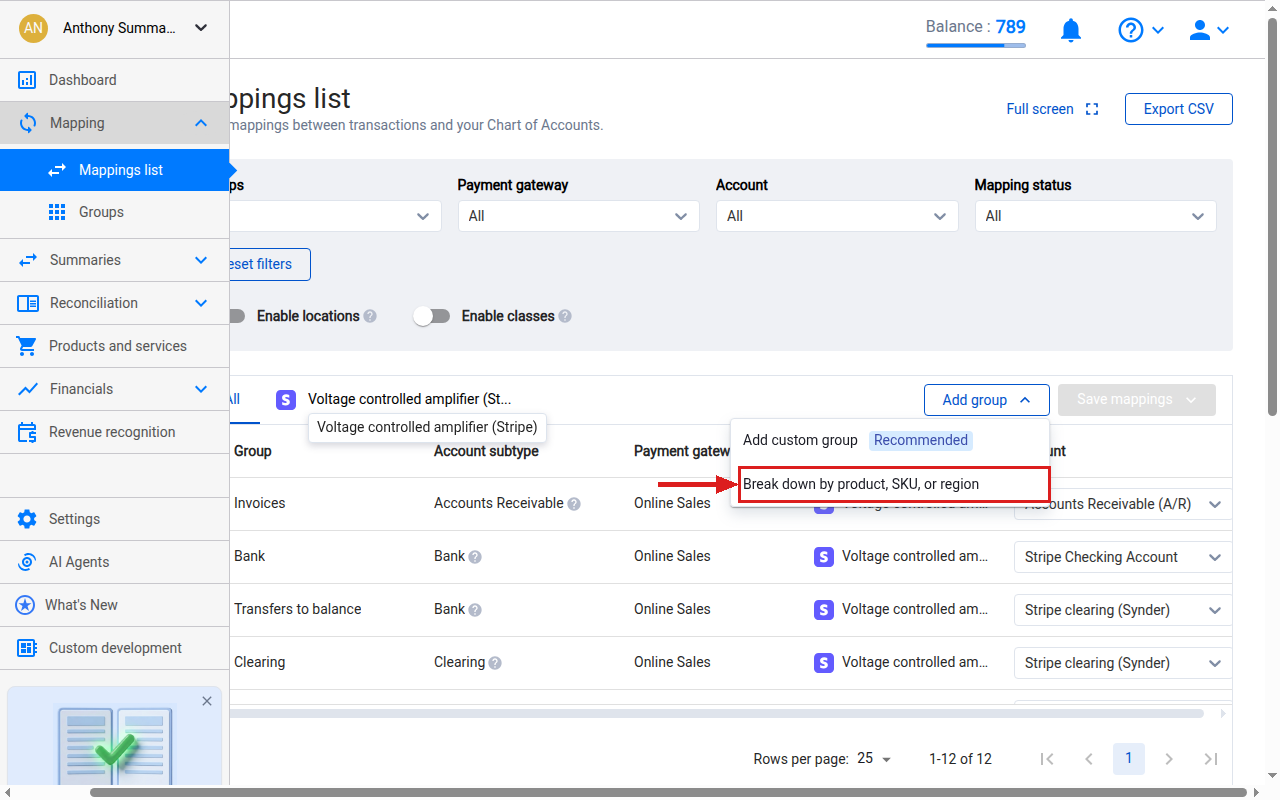
- Go to Mapping → Mappings list and click Add group.
- Select “Break down by product, SKU, or region”. This will take you directly to mapping settings.
- Enable Group by region.
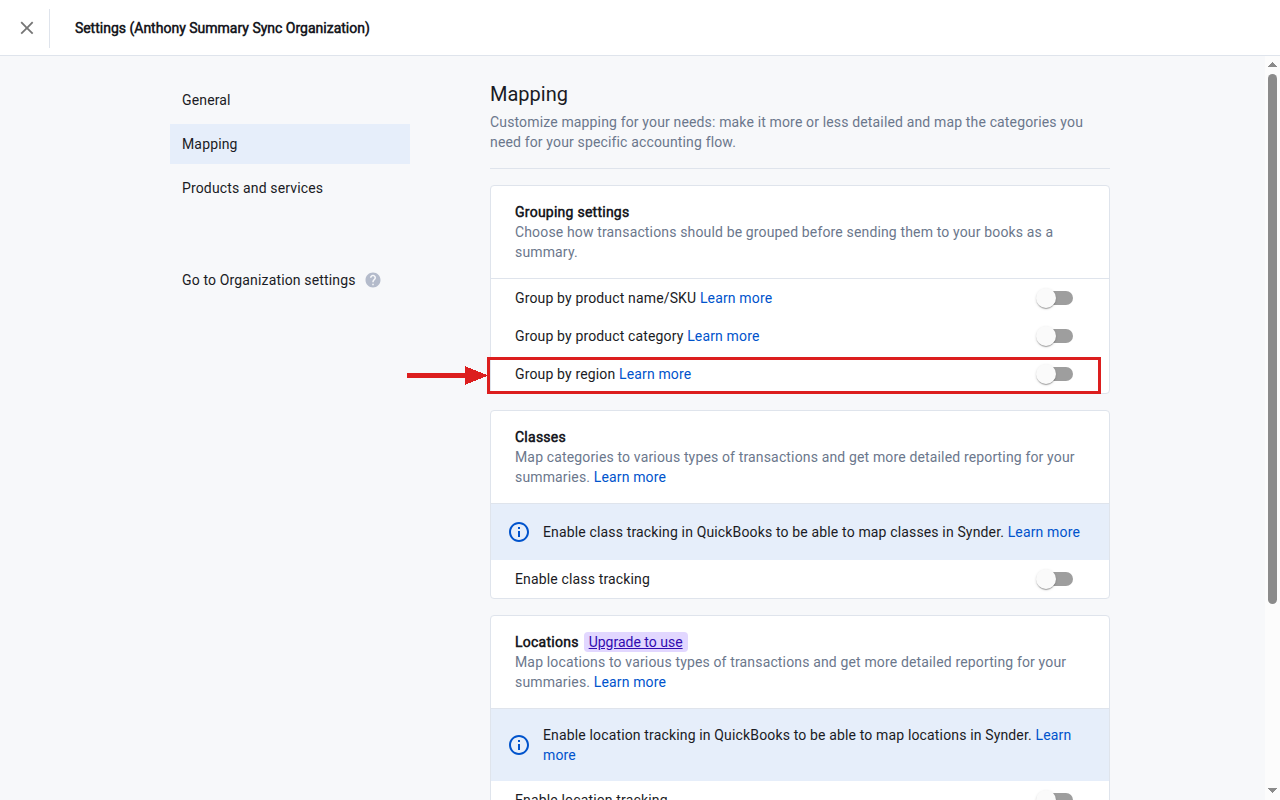
- Return to Mapping → Mappings list — you will now see a separate Taxes Payable line for each region. Assign the correct tax code and account to each.
- Save and rebuild existing summaries.
Unknown and N/A entries:
- Unknown — the transaction arrived without usable location data. Use Custom Groups (see below) to handle these.
- N/A — no shipping or billing address was present (common for subscription renewals). Assign to your default tax account.
Need more granular control? Use Custom Groups alongside Group by Region — for example, to split by city, customer, or ZIP code. Go to Mapping → Groups → Add group, set Type to Custom, define your conditions, and select Taxes Payable as the accounting category. Custom groups take priority; Group by Region handles everything that doesn’t match.
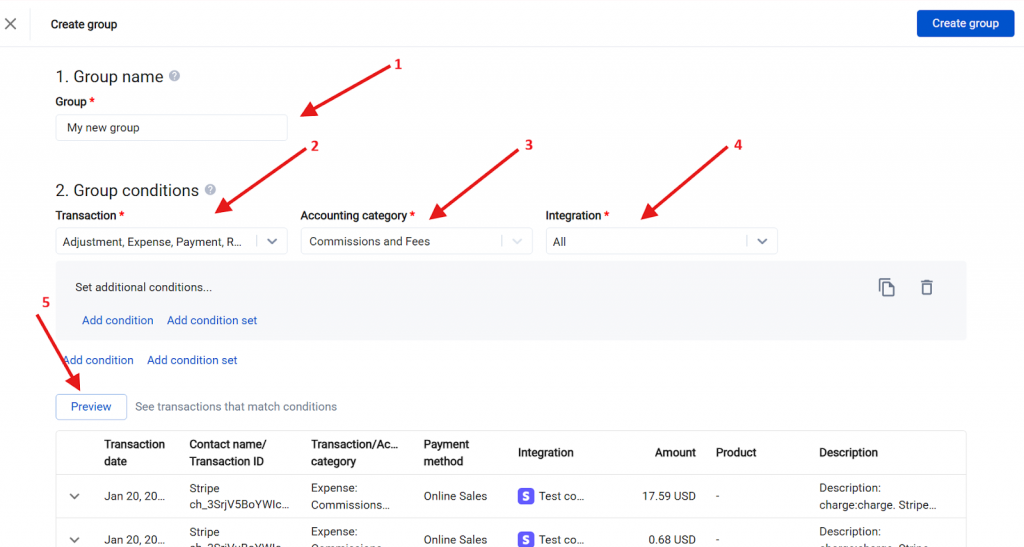
Per-Transaction: Smart Rules
Smart Rules (Recipes) let you route tax by shipping location automatically — no custom development required.
- Enable Use tax codes in your integration settings.
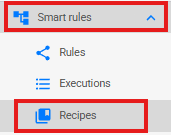
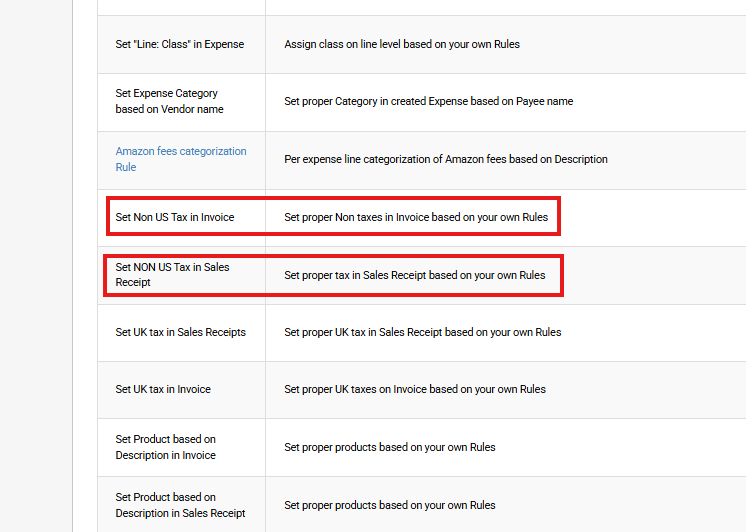
- Go to Smart Rules → Recipes and find “Set NON US Tax in Sales Receipt” or “Set Non US Tax in Invoice” — enable both if you use both transaction types.
- Click Try it out to open the recipe builder.
- In the IF block: set Shipping Address → Region → Contains → [region name or abbreviation].
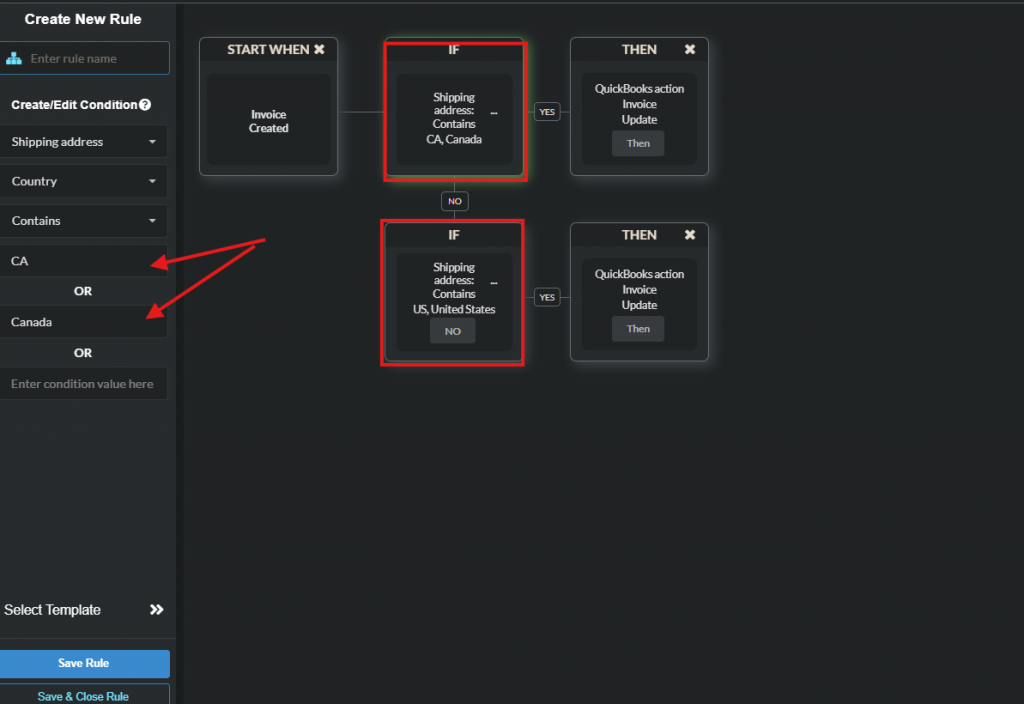
- In the THEN block: select Set QuickBooks Online entity data → Tax → [your tax code].
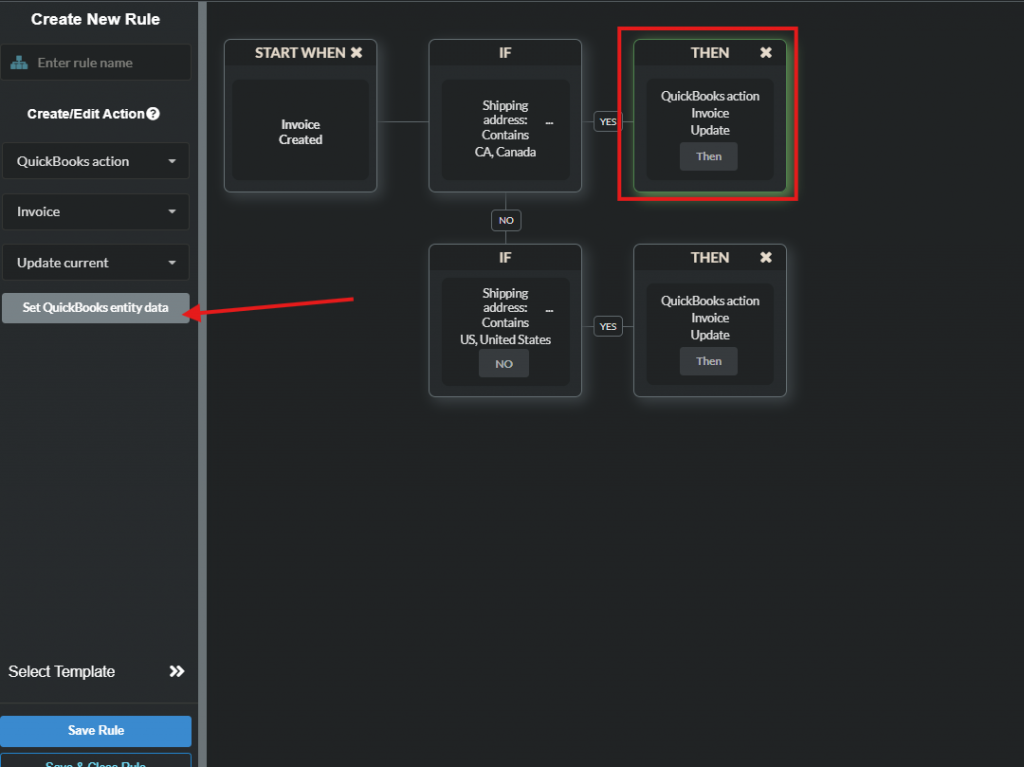
- Add additional IF/THEN blocks for each region you sell to.
- Click Save & Close Rule.
Rule order matters — Synder applies the first matching condition. Arrange rules from most specific to least specific. See How to Apply Non-US Sales Tax Based on Shipping Location Using Recipes for a full walkthrough.
When Your Payment Platform Sends No Tax Data
If your payment platform doesn’t include tax in transaction data — for example, Stripe without Stripe Tax, or certain PayPal setups — Synder has nothing to record. This is the most common reason tax is missing from your books after syncing.
Summary Sync: Group by Region can only route tax that already exists in transactions. If no tax data is coming through, a Pro plan where custom modifications are available is required. Contact Synder support to arrange this. Any future changes to your setup will require the modification to be updated.
Per-Transaction: Tax inclusive transactions without taxes cannot sync to your books. It will cause the sync to fail.
Use the Default Tax setting to apply a blanket tax code to all transactions without a tax. This will make sure that all transactions sync through without failures. If you also need to route different tax codes based on region, follow the same Smart Rules (Recipes) setup described in the Per-Transaction: Smart Rules section above.
To apply actual tax rates to transactions, you can utilise Smart Rules. If you are planning to apply tax to every sales transaction according to locations, utilize a region/address based condition on the rule and select a desired tax code for each of the locations. You can also utilize recipes inside the Smart Rules menu. There is a dedicated Tax template for region-based tax applying to Canadian users.
Removing, Excluding, or Reclassifying Incoming Tax
Sometimes your payment platform sends a tax amount that isn’t really tax — a common example is a processing or handling fee that was set up as a tax rate in Stripe, Shopify, or another platform. Synder passes through whatever the platform labels as tax, so that fee arrives combined with your real rate (for example, a 3% fee on top of 13% tax syncs as 16%), and if QuickBooks has no matching code the sync fails.
What you can do depends on what you want the amount to become:
1. Include it — accept it as tax. If you are fine treating the combined amount as tax, create the matching tax code in QuickBooks Online and resync. See How to Fix Errors With Taxes in Synder. This is a self-serve setting.
2. Standardize it — apply one code regardless of rate. Use the Generic Tax Code → “Apply if a transaction contains taxes” setting (Per-Transaction mode) to ignore the incoming rate and post a single code you choose. Useful when the platform’s rate is wrong but you still want the amount filed as tax. This standardizes the rate; it does not separate the fee out. This is a self-serve setting.
3. Split it — separate the fee from the tax. If part of the amount is a fee and part is genuine tax, the incoming amount can be split so the tax posts as tax and the fee posts as a fee/expense line.
4. Reclassify it as a fee, or exclude it entirely. If the amount is really a fee rather than tax, it can be moved to a fee/expense line, recorded to a separate account, or excluded from the books altogether.
Important — options 3 and 4 require the Pro plan. Because they change what the integration sends before it reaches your books, they are delivered as a custom modification, which is only available on Synder’s Pro plan. Contact Synder support to arrange it, and note that any future changes to your setup may require the modification to be updated. Options 1 and 2, by contrast, act on the data after Synder receives it and are configured in your own settings at no extra cost.
The cleaner fix is often upstream: if a fee was configured as a tax rate in your payment platform, correcting it there — so it is recorded as a fee, not a tax — stops the combined rate at the source. Check your platform’s tax settings first.
When contacting support for options 3 or 4, tell us:
- Which payment platform the tax is coming from
- Whether you want it split, reclassified as a fee, recorded to a separate account, or excluded entirely
- Whether this applies to all transactions or only specific types
Reach out to the Synder team via live chat or email — we’re happy to help you find the right setup.
